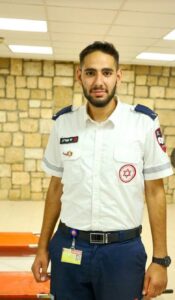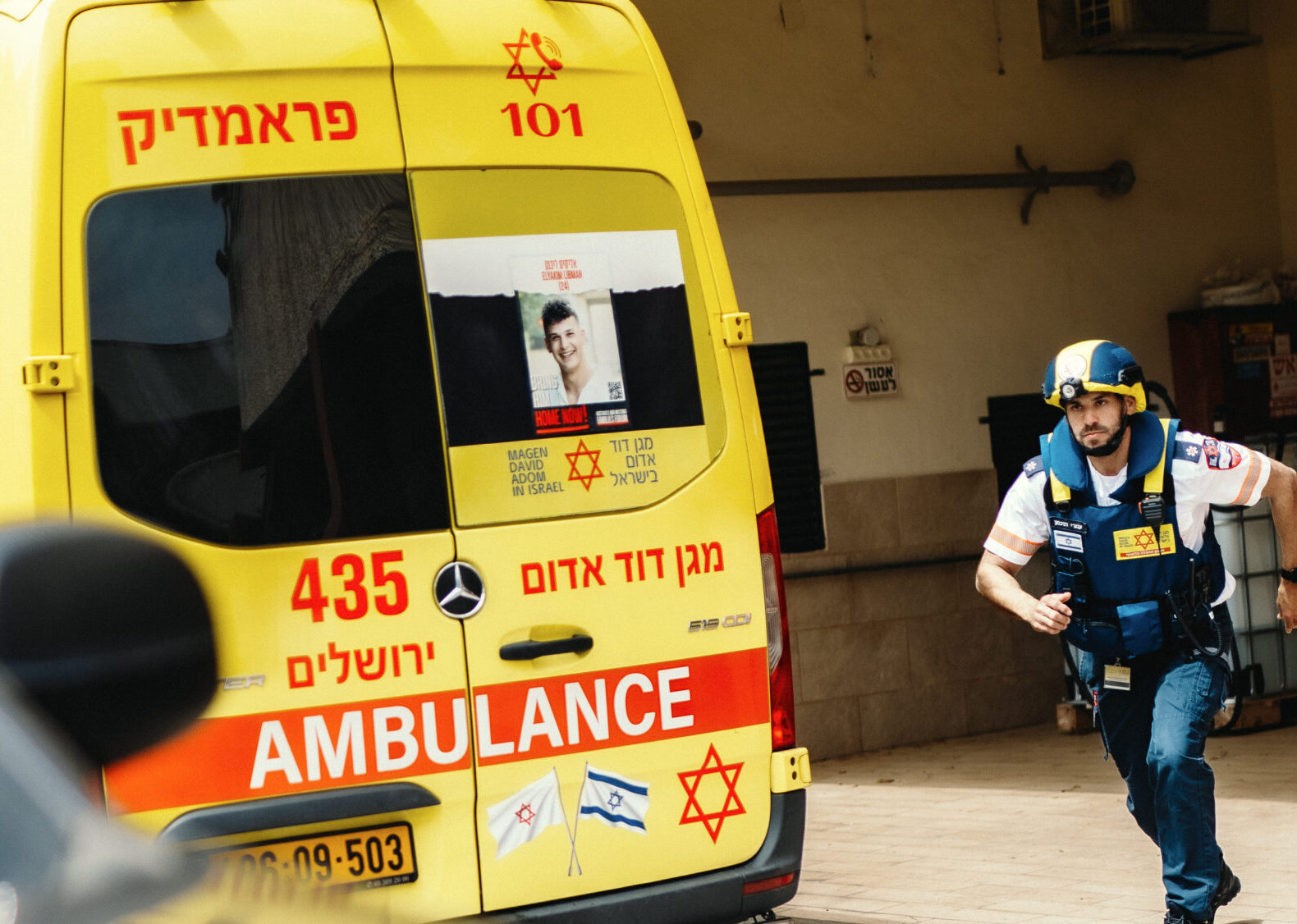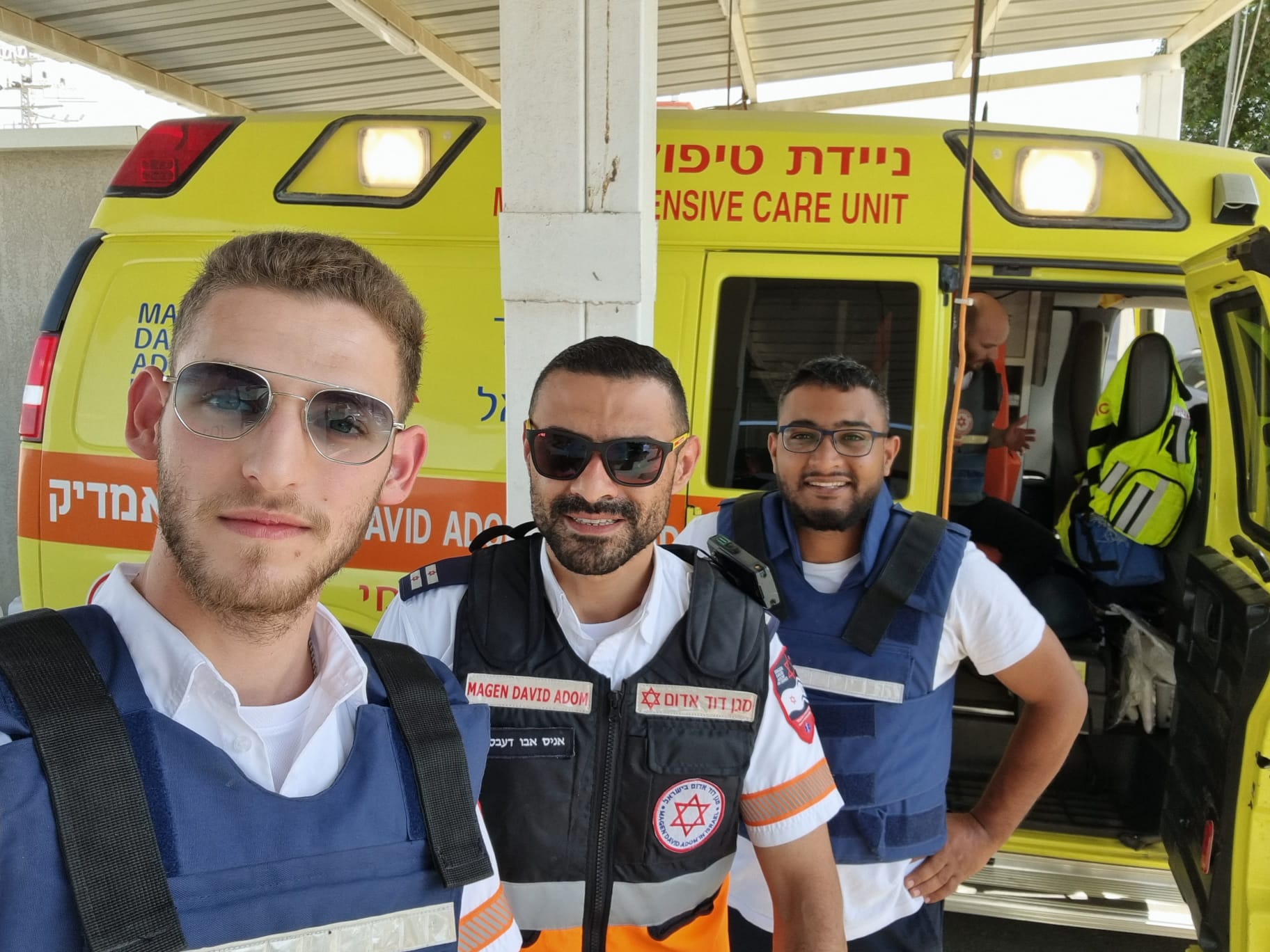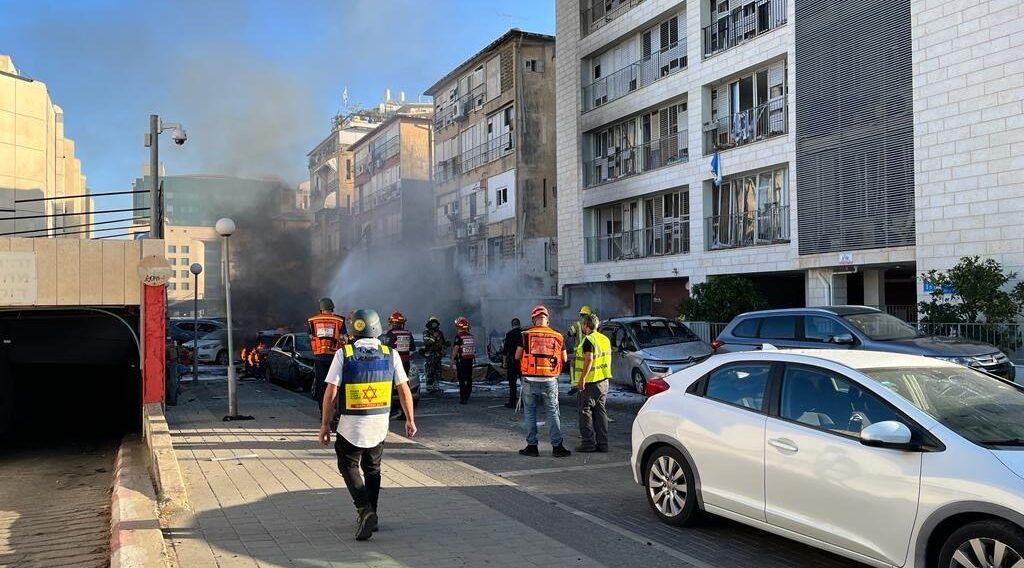





MDA volunteer Yishai Shitrit, a student at the Hesder Yeshiva in Sderot, was preparing for an exciting and uplifting Simchat Torah holiday at the yeshiva. “We woke up for another Shabbat, preparing in our hearts for an exciting Simchat Torah at the yeshiva, when suddenly the sirens startled everyone—heavy barrages, never-ending sirens.”
Yishai said that a dedicated application for MDA teams is installed on his phone, which dispatches first responders to emergencies based on their distance from the incident. “My phone didn’t stop vibrating and reporting emergencies,” he recalled. “A gunshot to the chest here, a shooting and severe injury there. I realized something else was happening, not just rocket fire. It was strange. We didn’t understand exactly what was going on, but I realized it was a security incident.”
He says, “My fellow MDA volunteer, Meir Pinchover, and I immediately set out in a vehicle to respond to emergency calls and provide first aid to the casualties. We brought along two soldiers from the yeshiva, just in case.”
“No one imagined what was really happening. We left the yeshiva, turned right onto the main street and reached the police station.” Before the eyes of the MDA volunteers, an unimaginable sight unfolded. A large number of Hamas terrorists, armed and wearing green headbands, were getting out of white Toyota vehicles and storming the city’s police station. Some of them spotted the MDA volunteers’ approaching vehicle and began shooting at it. “I had an instinctive reaction,” Yishai recalls. “I didn’t think, I acted on autopilot, made a U-turn and drove up onto the sidewalk to get my friends away from the danger, and then the car suddenly stalled,” he says of those dramatic moments. “That was our first miracle that day. The car wouldn’t move, in an area swarming with terrorists, and we were completely exposed. I keep trying, pressing the gas, and meanwhile one of the soldiers in the car with me is shooting at the terrorists. I don’t know how, but it worked; they didn’t charge at us. There was an exchange of fire the entire time. Eventually, we managed to drive away, straight back to the yeshiva, while reporting what was happening to the MDA dispatch center. When we reached the yeshiva, we stopped the prayers and warned the guys. At the yeshiva everyone observes Shabbat and isn’t connected to their phones, and it was also early in the morning. We sealed the yeshiva tight and split into squads. Those with weapons organized for defense, and all the EMTs got ready to help with medical treatment. We gathered medical equipment, went over the protocols and prepared to treat casualties. Elderly people and families living nearby came to us to hide; the yeshiva turned into a kind of fortress. After a while, when the sound of gunfire died down a little, a friend of mine from MDA’s Ayalon Region and I left the yeshiva, still in our Shabbat clothes, and without thinking twice headed to the MDA station, where a field hospital had been set up. Our MDA colleagues welcomed the help. I joined the evacuation of casualties: treating a wounded person, evacuating him, returning to Sderot and doing it all over again, until late at night. There isn’t room to describe everything we did and the sights we saw. We treated the wounded, stopped bleeding, calmed people down, and sadly also took care of many of the dead who were brought to the Sderot station. It was an unparalleled experience. First and foremost, saving lives—a task I am accustomed to—but treating the body of a murdered person with dignity is also a sacred mission, and we had the privilege of doing that in addition to treating the injured. The elderly, police officers, soldiers, civilians… At some point on Shabbat, the Director General of MDA arrived at the Sderot station and provided us with mental support. From early morning until the small hours of the night, we treated the injured and the deceased, while the sounds of gunfire could still be heard in the city of Sderot. Throughout Shabbat, we were busy with our work and didn’t stop to think about the encounter with the terrorists near the police station. Only late at night did I realize that I had escaped death, and only by luck or divine providence was I not one of the fallen.” As a resident of Kiryat Shmona, Yishai’s life story seems to symbolize what the residents of the State of Israel are going through. “I was evacuated from my home in Kiryat Shmona,” he says. “Before I was evacuated, I managed to do shifts at the station, and today I try as much as I can to do shifts at the Sderot station and help the city’s residents. I did everything I know, everything I was taught, and everything I trained for. The daily reality for all residents of the State of Israel today is not normal,” Yishai concludes.“Every organization is composed of individuals, of people. The residents of the State of Israel can rely on MDA, knowing that in their time of need, the male and female volunteers and employees will do whatever is necessary to reach them as quickly as possible, treat them with dedication and professionalism, and get them to the hospital in time,” Yishai said.
Since October 7th, Yishai Shitrit’s life has continued to change. The Hesder Yeshiva student who left the study hall that morning to treat the wounded later enlisted as a combat soldier in the Kfir Brigade, fought in Gaza, and was recently discharged from his service. He also got married and established his home in Sderot—the city where he studied, volunteered for MDA, and on the morning of October 7th, found himself facing terrorists near the police station. Even today, his thoughts often return to that morning. To the memory of the drive with his fellow MDA volunteer Meir Pinchover, the encounter with the terrorists, the return to the yeshiva, and the long hours during which he joined the MDA teams at the station, treated the wounded, and went out time and again for evacuations. In the years since, he has also been a soldier and a combatant, but volunteering for MDA preceded all of that. On October 7th, even before he enlisted in the army, the training he received as an EMT and the experience he gained as a volunteer gave him the tools to act within an event that no one around him recognized. After managing to distance themselves from the terrorists, he and his friends reported to the MDA dispatch center, organized the EMTs and medical equipment at the yeshiva, and later joined the teams at the Sderot station. Today, as a married man, following his service as a combat soldier in Gaza and once again living in Sderot, that day remains a point in time he returns to. Not only because of the encounter he survived, but also because of the hours that followed, during which he continued to do what he already knew how to do as an MDA volunteer: save lives.