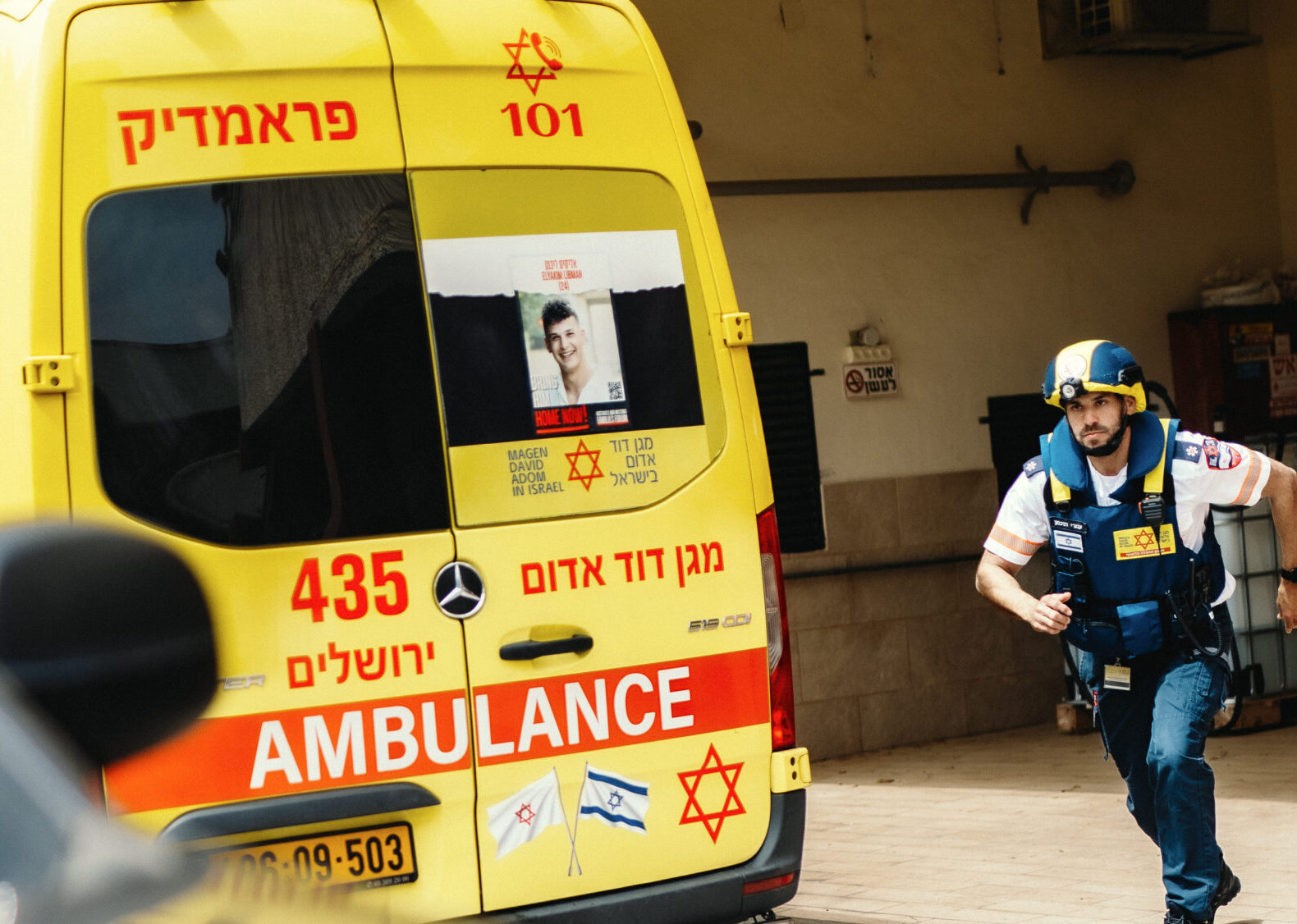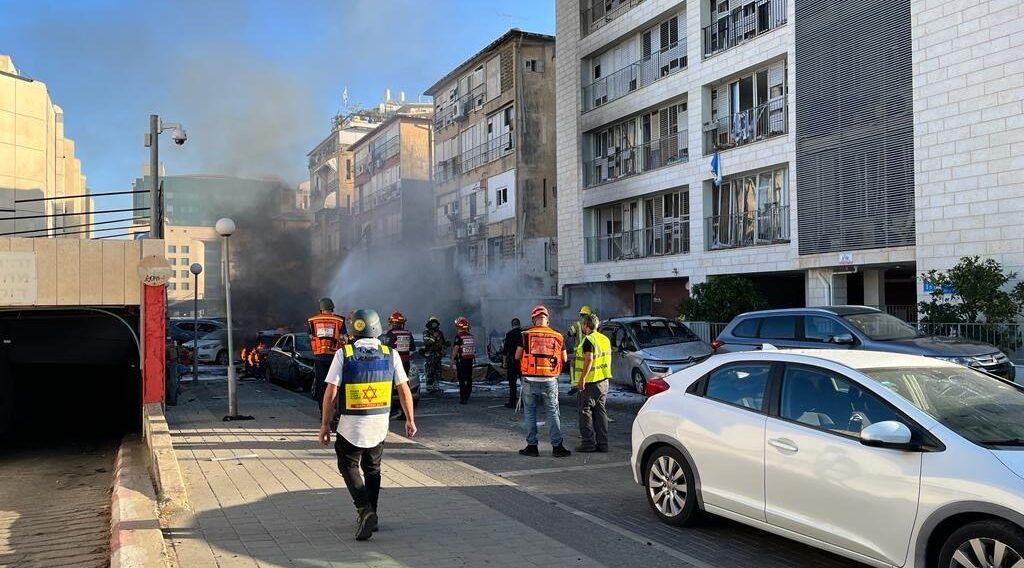




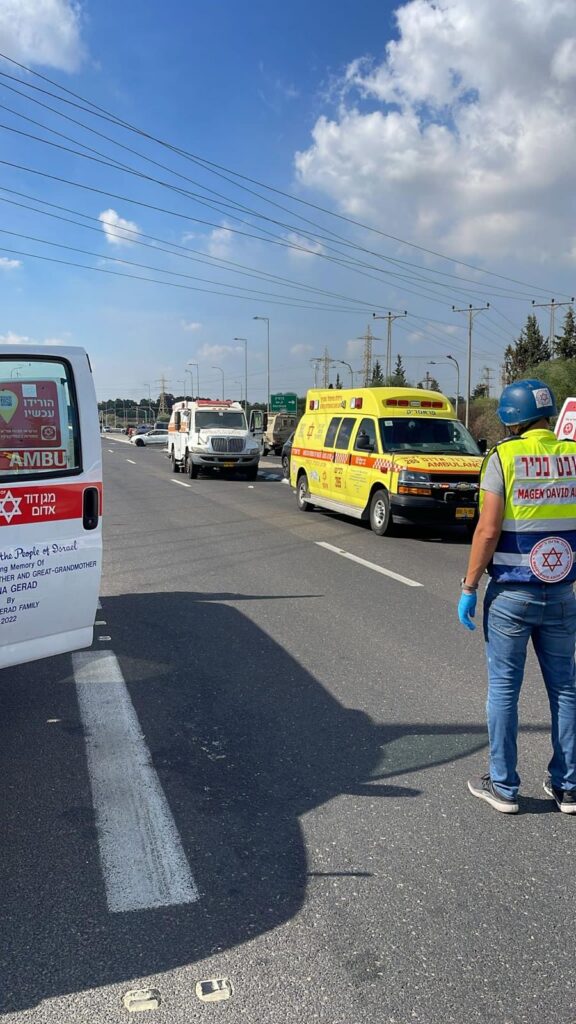
On October 7th, before 6:30 AM, an intensive care ambulance crew from the Ashkelon station, which included paramedics Orian Ozari and Ben Tetro, treated a woman suffering from severe shortness of breath and evacuated her to Barzilai Hospital in Ashkelon for further treatment. The two were at the end of a busy night shift and were already envisioning the rest that would follow. At 06:29, while still in the Barzilai Hospital parking lot, it was reported that alarms were sounding in Sderot and other extensive areas.
“A difficult night shift was ending,” Ben recalled. “And suddenly, we heard about rockets targeting Sderot, as well as central Israel and Jerusalem. Very unusual. Although no alarm sounded in Ashkelon, we are experienced. Without exchanging a word, we put on protective vests and helmets, and then the alarm sounded for us too. It was clear that the shift wouldn’t be ending soon. I reported via radio that we were available, and they sent us to the scene of a rocket impact in Ashkelon.
The report indicated a child with severe injuries. Under the alarms, we arrived at a mother and her two-month-old baby who were injured. As I understood, the baby was hit by shrapnel in the head, and the mother was also injured. We provided life-saving treatment and transferred them to the trauma room at the hospital.”
On their way back from the emergency room to the station, the crew identified a bullet-riddled vehicle. They initially thought the vehicle was hit by shrapnel related to the rocket impact, but then the injured person emerged and said: “They shot me, they shot me.” It turned out he had been shot by terrorists at the Sha’ar HaNegev junction and managed to escape to Ashkelon, despite his injuries. The crew provided him with life-saving treatment and evacuated him to Barzilai Hospital.
Afterward, the crew was dispatched to the Zikim junction, where they received injured individuals from Magen David Adom’s armored ambulances operating in the combat zones, as well as people who arrived independently or in military vehicles. They provided medical assistance and evacuated them to Barzilai Hospital.
“At a certain point, paramedics Nissim Karliker and Kobi Zeltzer arrived and took command; we were among the first ones there. The instruction I received was not to cross the Zikim junction southward. I was aware of this from previous escalations in the security situation. I was aware of my limits. If a missile hit me, I would be injured and become a burden on the medical and military systems.”
Throughout the day, the crews operated under alarms and rocket threats, and at one point, Ben and Orian were dispatched to treat casualties from a rocket impact on a house in Ashkelon: “We found two severely injured women, an elderly woman and her caregiver,” Ben recalled, “I felt very pained for both of them, but especially for the caregiver because she didn’t understand Hebrew, lying in a pool of blood, not understanding a word of what we were saying.
I tried to speak to her in English, hoping she understood a little or at least appreciated the effort and felt she was in good hands. We applied a tourniquet to her leg. She had shrapnel throughout her body; she was truly severely injured. It was difficult for us too, we were treating our friends, but I feel immense pride,” Ben concluded,