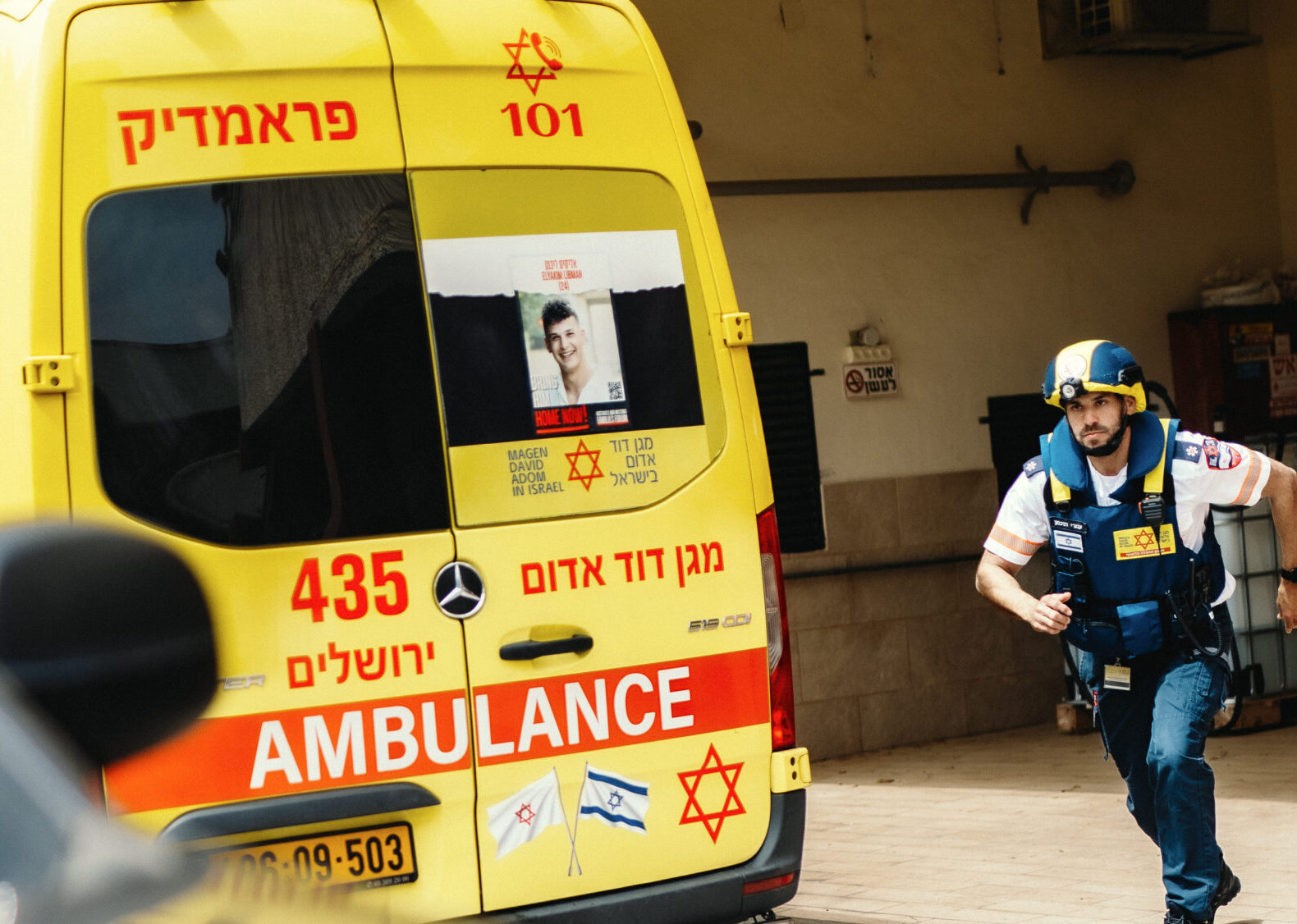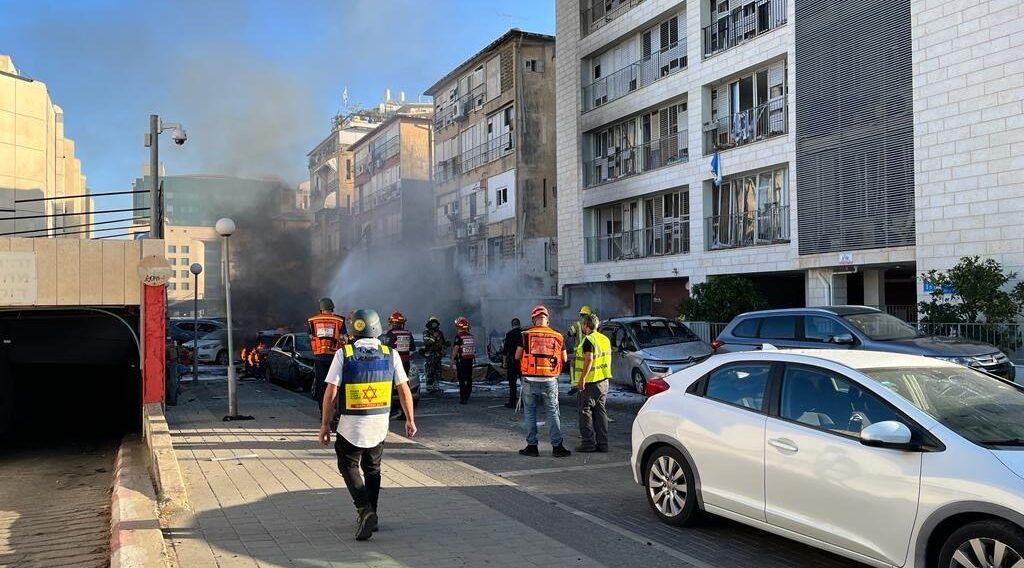

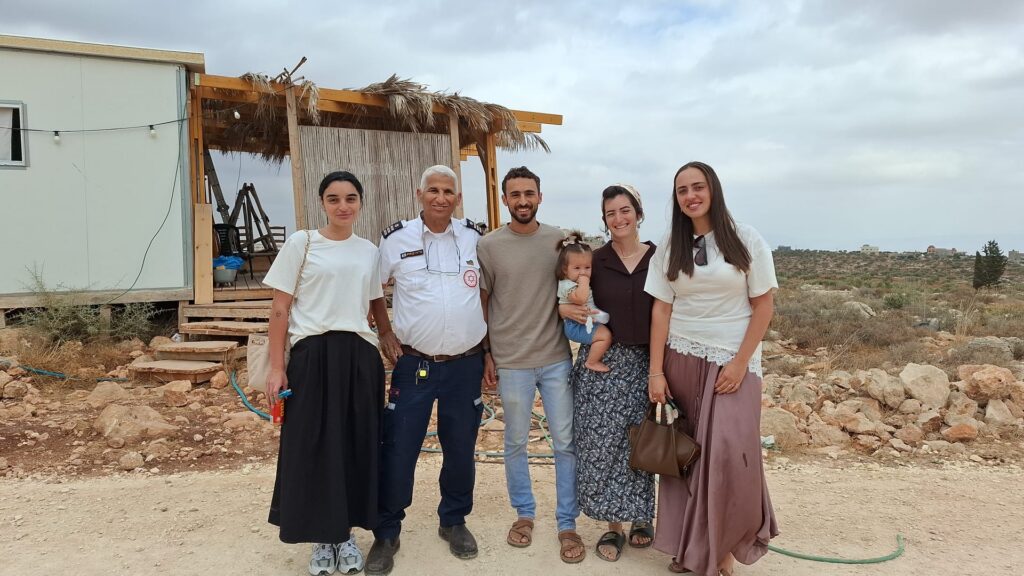
Veteran Magen David Adom paramedic, Neria Katoa, thought he had seen it all. Neria, a father and grandfather living in Ariel, has served in Magen David Adom for over 40 years. Among other things, he was part of the teams that treated victims of severe terror attacks. “A Magen David Adom paramedic living in Ariel – I was among the first to arrive at all the most severe attacks, fighting for the lives of the wounded. Unfortunately, I witnessed terrible tragedies and also heartwarming rescue stories. But a day like October 7th, I had never seen. I hope I never will again,” he said.
It was supposed to be a joyful and moving holiday, Simchat Torah. Neria, an observant man, hosted family members from Israel and abroad in his home. Early in the morning, he made his way to the synagogue, where he serves in a public role. He arrived early to ensure everything was ready for the worshippers. At ten minutes to seven in the morning, his phone rang.
“Suddenly, a call from Magen David Adom,” he recalled, “in the synagogue, on Shabbat. But saving lives comes first. I am always available; that’s what it means to be a Magen David Adom member. They told me, ‘Get yourself ready, put on your uniform. Take an ambulance and drive south.’ I didn’t know what had happened yet, but you don’t ask questions. We will do and we will hear. We drive, and all the questions come on the way. It was clear to me that if they asked me to go south, there was a good reason.”
Neria’s wife, who arrived at the synagogue after him to help, saw him talking on the phone and immediately understood that something unusual had happened. Neria explained that he was going south and hurried to the Magen David Adom station, where he boarded a protected ambulance with Magen David Adom paramedic, Eddie German. His wife remained at home with all the guests.
“We drove south,” Neria recounted, “and as we got closer, we saw smoke rising. The entire way, sirens and rocket fire, impacts in the center; we heard about a fatality in Kfar Aviv. It was frightening, but the mission came first. Under actual fire, we continued driving until we reached the Magen David Adom Ashkelon station. We went in for a briefing, and then the sirens started non-stop. We went into the shelter; the sirens wouldn’t end, perhaps 20 continuous minutes. At some point, we decided to go out despite the sirens and try to reach the wounded. We positioned ourselves at the Zikim Junction, with constant rocket fire and explosion sounds. There, we prepared with additional Magen David Adom teams, and protected Magen David Adom forces and IDF forces brought casualties to us.”
The sights at the junction reminded Neria of a feeling he had experienced 50 years earlier, during the Yom Kippur War:
“It took me back in time. I was a 13-year-old boy, and I’ll never forget being in a synagogue in Rosh HaAyin when suddenly a neighbor burst in, shouting something. My father left, then my brother left, my uncle left; the synagogue emptied of adults. All the reservists gathered at the commercial center in Rosh HaAyin, on their way to the front, some still wearing their prayer shawls, in the middle of the fast, and religious family members brought them food in pots so they wouldn’t go to war while fasting. As a child, I stood and watched, thinking – if they are traveling on Yom Kippur, eating on Yom Kippur, the world is collapsing.
That’s how I felt, and that feeling came back to me when I arrived at the junction. As soon as we stopped, they brought out three fatalities. I immediately recognized there was no way to help them, but we made sure they were laid down respectfully. Then another wave of wounded arrived. Eddie and I received three of them: a young soldier, shot in the chest, and two other girls wounded from the Nova party. This was in the morning. Until that moment, I hadn’t heard about Nova.”
The encounter with the wounded was another pivotal moment, a moment when Neria understood that this was a disaster unlike anything we had ever experienced:
“The girls were terrified. Screaming. I tried to calm them down and get them to talk. I told them they were in a safe place. They told me they had been at the party, that they had seen hundreds of dead. They told me that a young man had picked them up and tried to help them escape, but the terrorists shot at them. They heard gunfire, a shattering window, bullets whistling over them, and the car overturned. The driver, a man they didn’t know, calmed them down, and then they heard a burst of gunfire. The terrorists shot him. They hid, playing dead, upside down in the car, until somehow they were found and brought to me,” Neria recalled.
“Shock. The stories were unimaginable. The most severely wounded was actually the soldier. A young man with a chest injury, who only wanted to return to the fight. On the way, he mentioned he was about to get married. I treated them and evacuated them to Barzilai, and we immediately returned to the junction. There was no time to think or process.” he said.
At the Zikim Junction, Magen David Adom teams treated the casualties and evacuated them by ambulance to hospitals. Magen David Adom teams arrived from all over the country to reinforce their colleagues in the south.
“There was an impressive force of ambulances,” Neria said, “everyone working professionally, with composure, even though our hearts were breaking inside. The mode of operation was a quick scan, life-saving actions, injury classification, and evacuation to the hospital.”
In a moment of relative quiet, between waves, the observant EMTs and paramedics gathered for the Mincha prayer:
“Magen David Adom personnel, employees, volunteers, there’s nothing like them. Although personally, I was torn away from the synagogue and my family, I work for this organization. It was amazing and inspiring to see volunteers, with black yarmulkes, side-locks, and holiday clothes of Hasidim who left everything and rushed to save lives, alongside secular people, women, everyone working together. Around three o’clock, it was quiet, we stood for the holiday Mincha prayer, and then suddenly – boom. An alarm, shouts of ‘everyone lie down,’ and from standing prayer, everyone was lying on the ground. It’s unbelievable.”
Late at night, Neria and Eddie were sent to reinforce the Sderot station.
“Entering Sderot was a terrible sight,” Neria recounted, “around ten at night, bodies lay in the streets. Signs of gunfire, sounds of battle, attack helicopters firing as if right above you. At the Magen David Adom Sderot station, there were many people, Magen David Adom forces, army forces. In the early morning, they sent us out for a call about a person having a panic attack. And I thought, look at that, how Magen David Adom responds to regular routine calls amidst this inferno. I only went home in the morning. Those were 24 hours that will stay with me forever,” Neria concluded.