
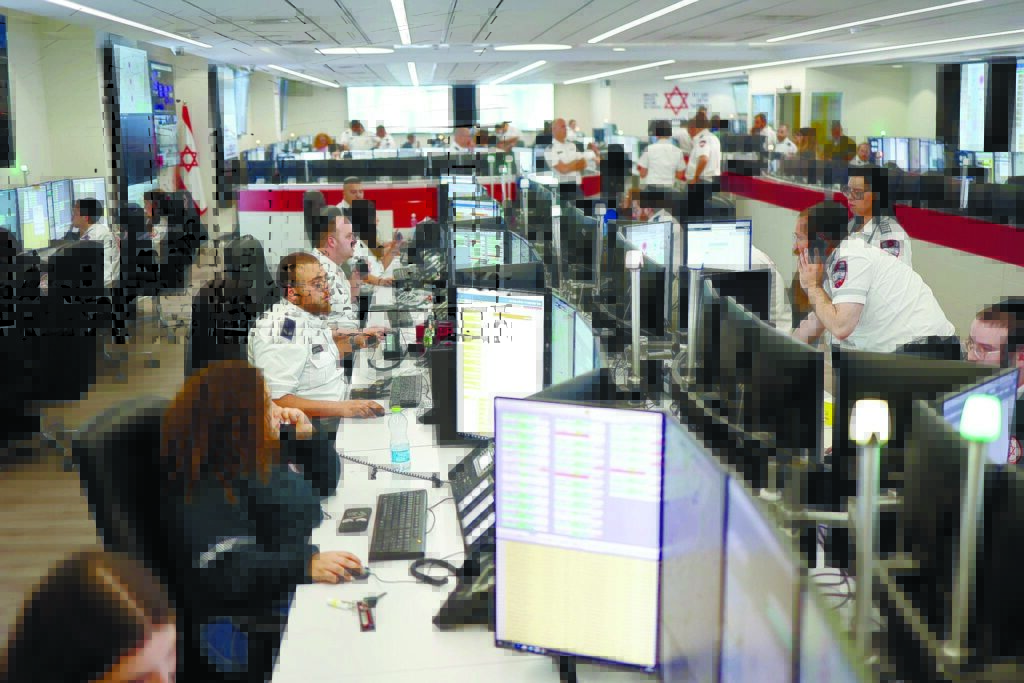
MDA operates seven 101 dispatch centers, where emergency calls are received and MDA teams are dispatched. MDA dispatch centers are staffed by paramedics and EMTs with operational experience. This experience is reflected in the rapid assessment of the patient’s medical condition and the provision of initial medical assistance by guiding bystanders.
The operational experience that dispatchers bring with them also allows for the assessment of complex situations and the provision of an operational response integrated with medical treatment. Reviewing the scene of an incident, ensuring the safety of the patient and those around them, utilizing aids found at the scene and bystanders, and more—all of these are built on professional-operational experience.
The dispatch center includes EMTs or paramedics who receive emergency calls by phone, as well as shift officers who dispatch forces and manage the teams. An emergency call reaches the dispatch center geographically closest to the caller’s location—as long as there is a dispatcher available at that center to take the call. If the call takers at that center are busy, the call will be answered very quickly at another center.
The average response time for an emergency call on the 101 line is approximately 3 seconds. The command and control software is shared by all dispatch centers, and therefore the geographical location of the call taker is effectively irrelevant. The Haifa center can receive calls from Eilat, and the Ashdod center can receive calls from Petah Tikva, for example. The dispatcher automatically sees the caller’s location on a map and can also receive photos or videos from the scene in real time.
MDA’s command and control software is a dedicated and unique system developed by MDA teams and adapted to the organization’s workflow as a national organization.
In practice, there is no operational division of sectors between teams. The location of all teams, as well as first responders and volunteers, is constantly tracked by the system. When the call taker assigns a medical code to an incident, the system automatically dispatches the nearest ambulance or mobile intensive care unit to the scene, along with five to ten volunteer first responders. In fact, within seconds of receiving the call, teams are already sent to the scene via the automatic dispatch system, without human intervention.
The shift officer can divert ambulances to other missions and change their designation, but only after the team has already been dispatched to the incident by the computer algorithm. The shift officer can ask dispatchers to call the applicant back to complete details, assess changes in medical status, and more.
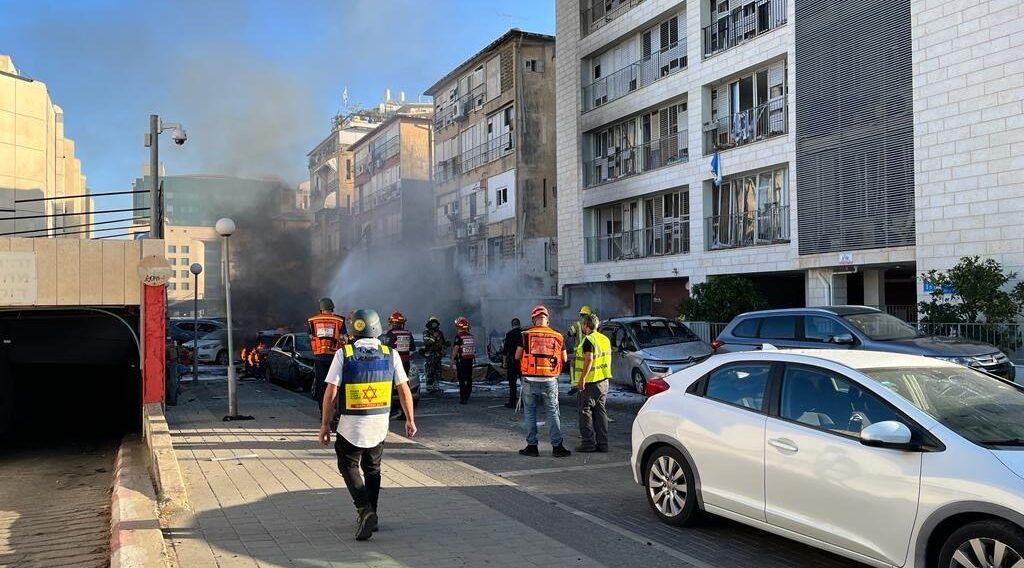
The shift officer manages the teams and the incidents. Part of their role is to ensure that teams have indeed responded and departed for the incident, to provide them with vital details on their way, and, if necessary, to warn them of risks or special challenges at the scene. In mass casualty incidents, their role is to dispatch and add teams as needed, operate according to checklists for managing unusual events, build a situational picture, report to and seek assistance from emergency authorities and the national dispatch center, address complex challenges, relay information to hospitals regarding the condition or unusual volume of casualties, and more.