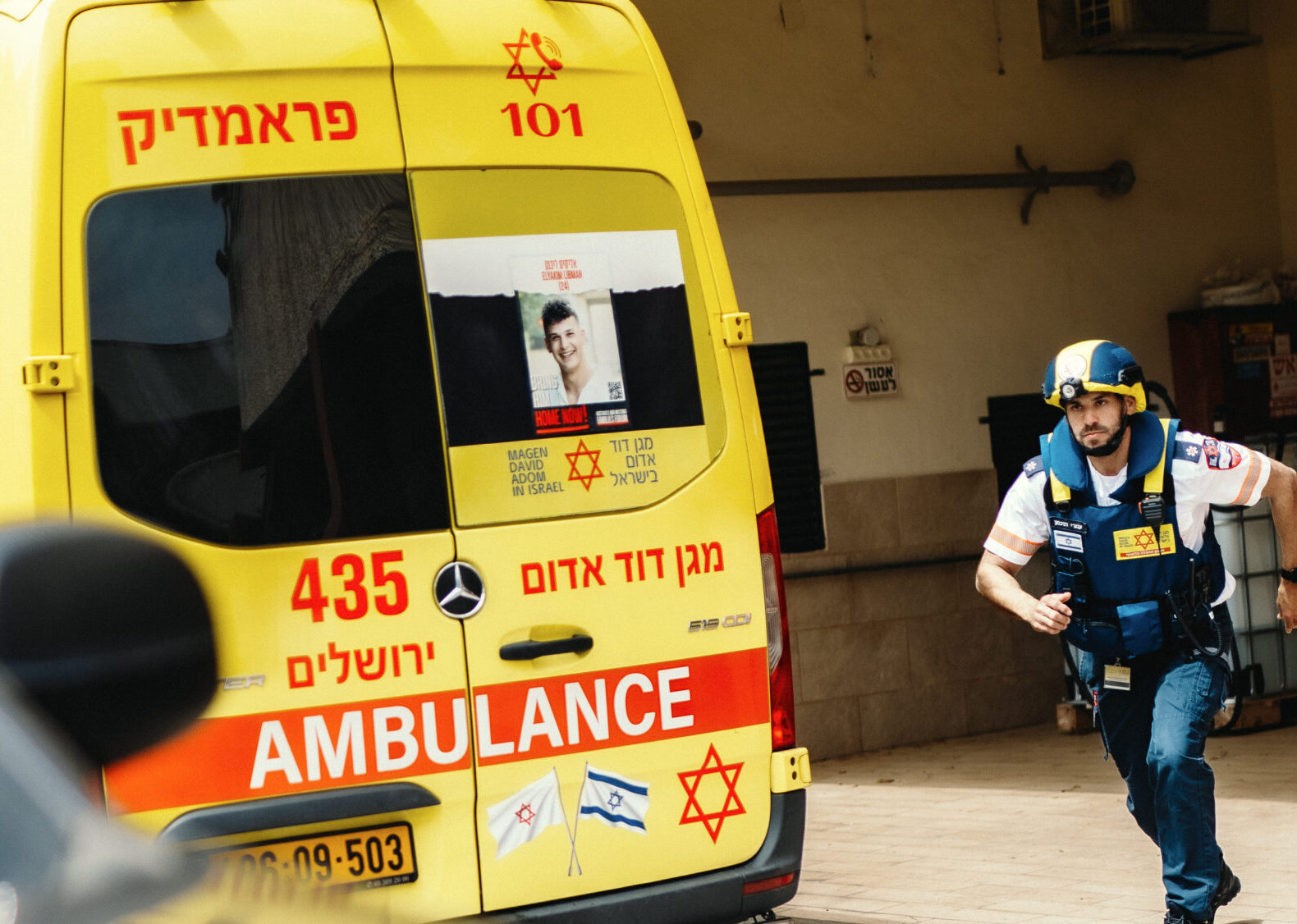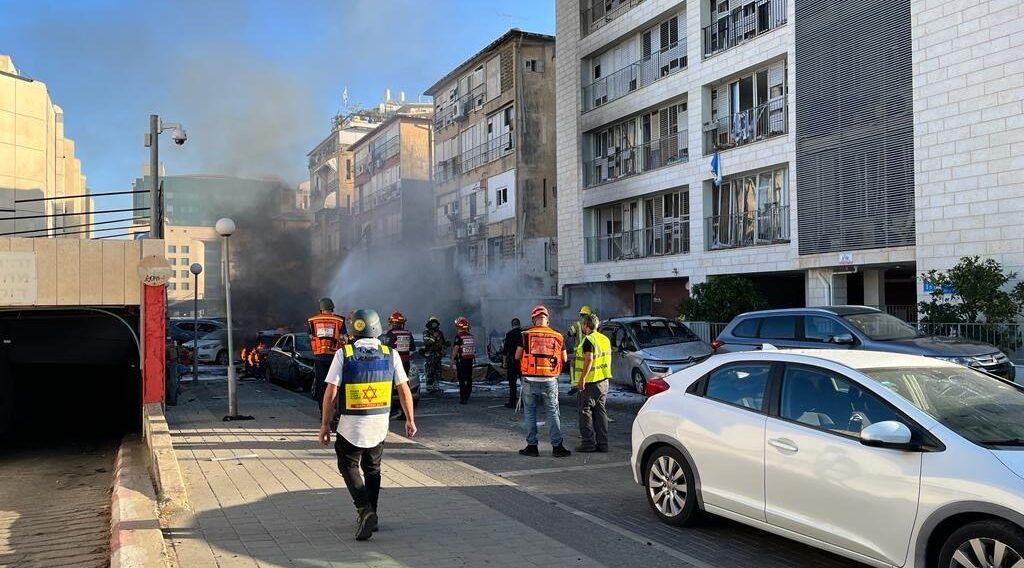





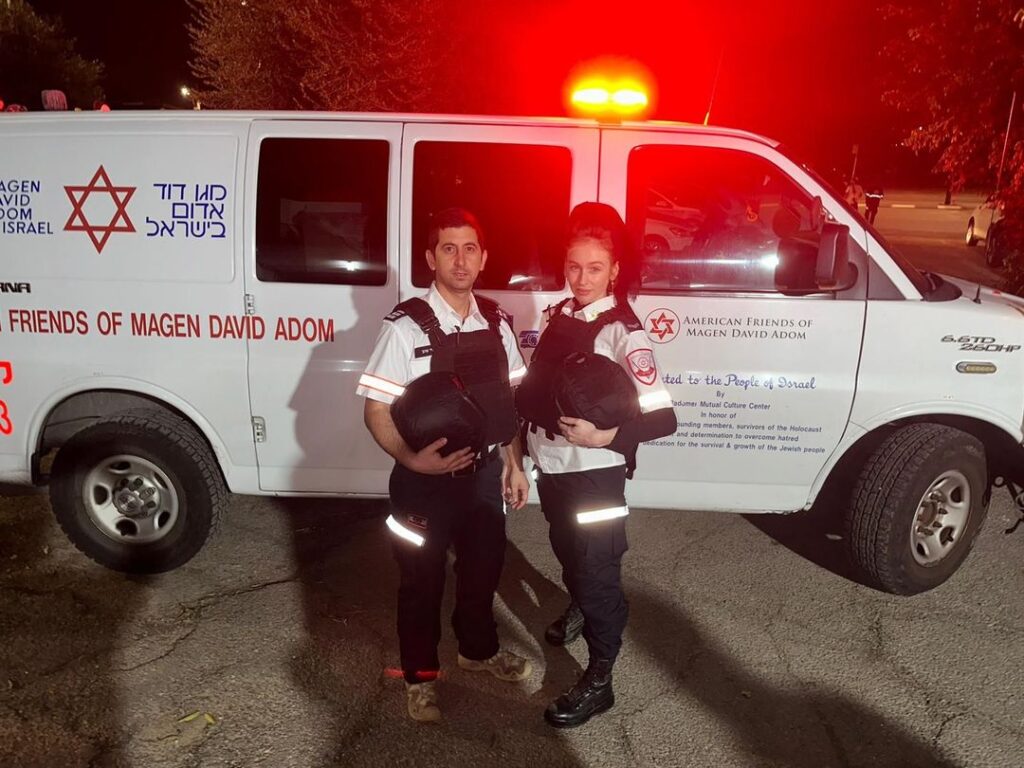
Moti Shuv, a volunteer paramedic and the volunteer supervisor at the Magen David Adom station in Ashkelon, treated casualties under fire, and when the treatment ended, he even assisted in collecting bodies from the horrific massacre.
“That Saturday my wife and I were at home, asleep. At around 6:20 a.m. we heard explosions, and they woke me up. I thought maybe it was our own training exercises, or even theirs, although it’s strange to train on Shabbat. I tried to go back to sleep, and a few minutes later…
Sirens started. They sounded endlessly. In our house, there is no protected space (mamad), so we went down to the stairwell. I turned on my phone. We could hear the impacts with our own ears. We are religious, so I didn’t listen to the news, but my wife, who is also a Magen David Adom EMT, and I took our first responder bags, ran together to the car so we could drive to help,
and waited for instructions from the dispatch center. When we went outside, we saw a mushroom cloud from a location near us. I called the Magen David Adom first responder center and reported it. We went to scan the area, and there were no physical casualties, but the apartment was on fire. We assisted in extinguishing the fire.
It was difficult to get to the car and start driving; there were many sirens, and each time we stopped, entered a protected space, or lay on the ground to protect ourselves. Eventually, we managed to reach the station to take an ambulance. We drove to Kochav Michael, and there we treated the wounded from Sderot and the Gaza envelope communities. We evacuated from Kibbutz
Gevim a moderately wounded person, who was hit by three bullets in the knee, thigh, and shin. Afterward, we treated a woman in labor, and as we left the hospital, a pickup truck arrived with five bodies, two adults, bodies, a woman, and two children. We helped lower them to the ground, onto a sheet, and took them to pathology. After them arrived
another vehicle, from the Medical Corps, and it also contained a mountain of bodies. We stayed there to help lower them, to put them in white bags. I estimate that we handled about eighty bodies, together with ZAKA.”
Moti’s initiative was not unusual. Magen David Adom logistics teams helped evacuate and collect bodies from the streets and treatment sites. First respectfully at Magen David Adom stations and then to dedicated facilities. This is how bodies were collected
at Magen David Adom Sderot, Ofakim, and Netivot. And Moti continues:
“I have been a Magen David Adom volunteer for twenty years, since Hanukkah 2003, and also a ZAKA volunteer for the past 17 years. Emergency medicine is almost my entire life. Over the years, I have been in Magen David Adom or
a paramedic in the reserves. I studied in courses; EMTs, doctors, they prepare you for treating mass casualty incidents, for operating under fire, and there is no doubt that this training helped. Every weekend I am an on-call home responder with an ICU ambulance.
And if an ambulance driver also comes with me to a case, he will drive and I will sit in the back for evacuation, and that way we open another ‘above standard’ ambulance. The twenty years of field experience in the system give me the tools
to cope the moment I am exposed to an event I have not yet encountered. Even when you think you have seen everything, something you haven’t seen will always come along, and even if a long time has passed since you used a certain protocol, the experience and knowledge provide the composure to deal with a new situation.”
“The real hero is my wife,” Moti concludes, “Unlike me, she hasn’t seen many dead people before; it’s hard to get the two children she saw, the burned woman, out of her thoughts. She only saw that. I saw hundreds this week. It’s hard for her. She is the hero here; she overcame it, and together we both lowered
murder victims from a pickup truck onto a white sheet, and gave them their final respects. I must express our appreciation and gratitude to all Magen David Adom volunteers for the extensive assistance they provided under fire on that Saturday.”