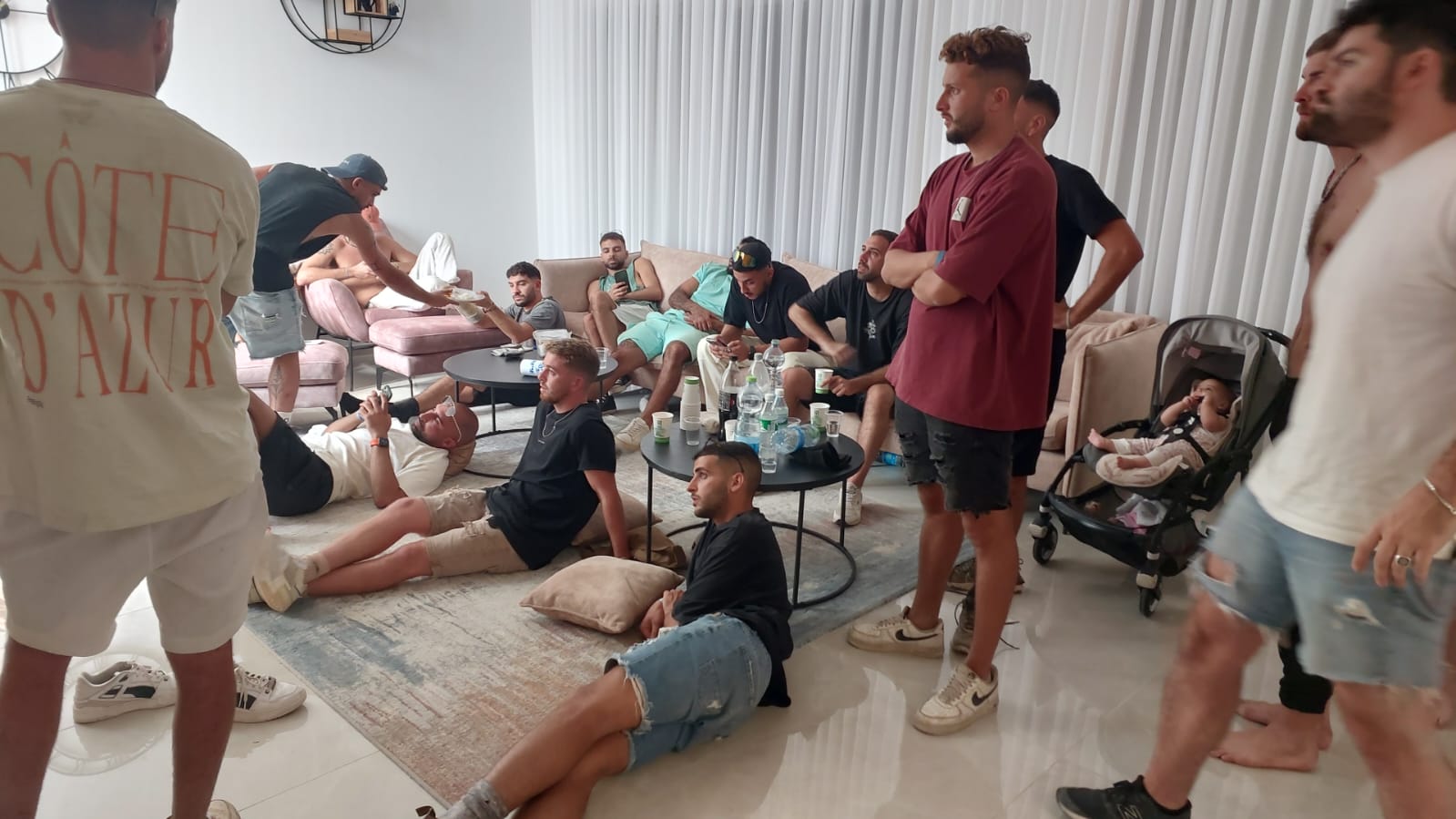






A., (full name withheld), an MDA employee in the Lachish Region, lives in Kibbutz Kfar Aza, which was severely hit during that Saturday’s attack:
“At 06:28, I woke up to a barrage of rockets. After a while, it became clear that this was a much larger event. At one point, I went outside and saw soldiers in a battle over my home, the kibbutz. I shouted to them: ‘I’m an EMT, if there are casualties, bring them to me.’ Terrorists broke into the home of family friends. They locked themselves in the safe room, and the father held the handle of the safe room door. The terrorists placed an explosive charge on the door, and the father was severely injured in his hands and chest. The family members improvised a tourniquet from a phone charger, and later soldiers arrived and gave them standard tourniquets. When it became possible, they brought him to me. I treated him, and from that moment, my home became a sort of emergency room.”
The MDA emergency motorcycle, which A. used as an MDA first responder, was damaged by the terrorists. “They dismantled it,” says A., “and stole all the equipment.”
A. remembers that a special forces unit brought their commander into his home after he was shot and critically wounded. One soldier applied pressure to the bleeding to stop it, while A. performed life-saving treatments such as applying tourniquets. Together, they loaded the wounded onto a vehicle that set out to meet a rescue helicopter. On the way, terrorists fired at them from a pickup truck. The soldier who was applying pressure and the wounded commander were both killed. It is inconceivable. From 02:00 to 06:00, A. remained at the gas station near the kibbutz to continue saving lives. At one point, he heard a call—one that no MDA member could remain indifferent to, as if they were calling his own name—
“I heard, ‘EMT, EMT,’ and special forces soldiers arrived and brought wounded soldiers to me. I treated them as well.”
The wounded man he treated in his living room, the family friend, survived the severe injury and is now in rehabilitation. “He didn’t think he would make it,” A. recalls, “I told him then: ‘You can’t die, you have to help me clean up all the blood you left in my house…'”