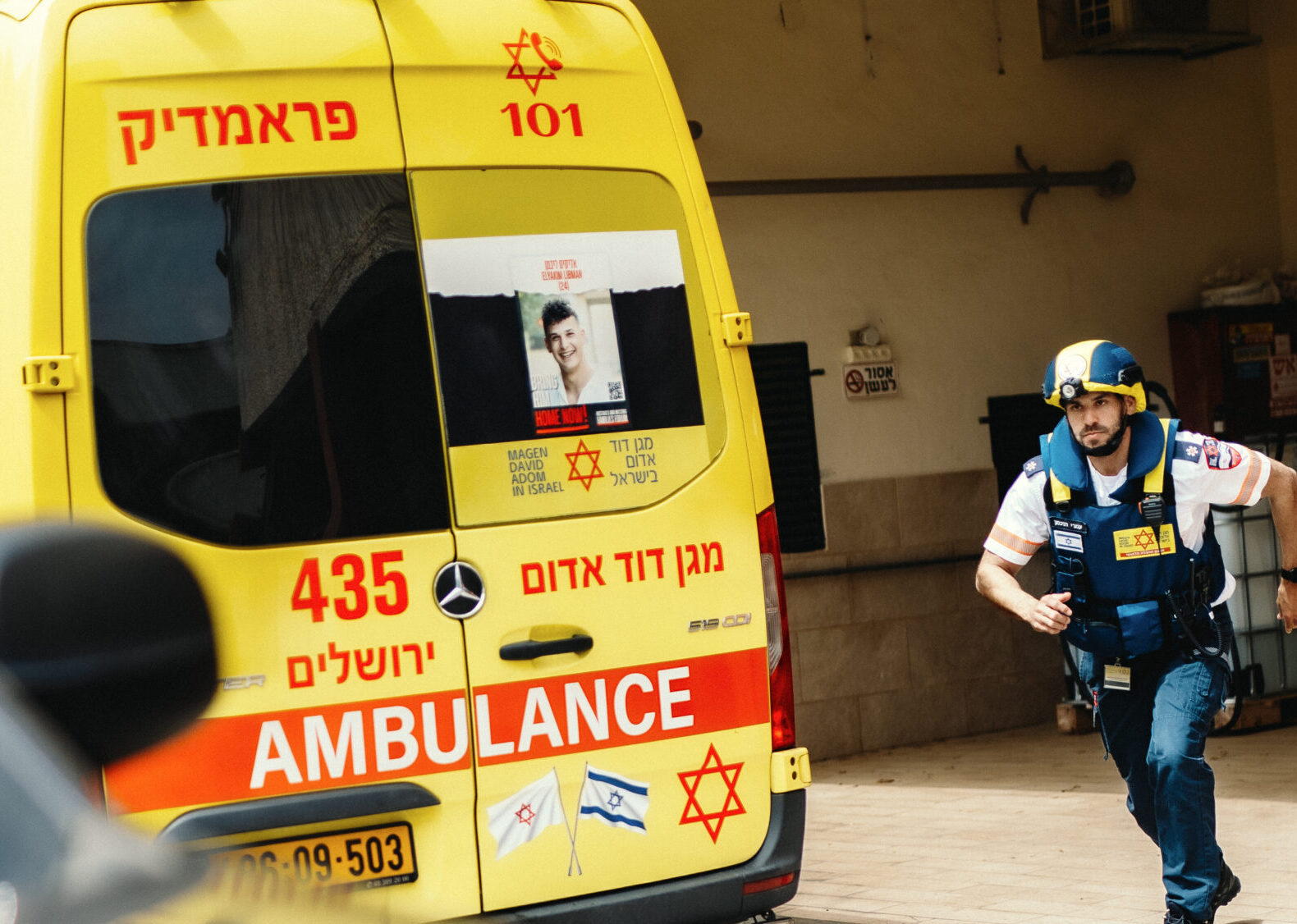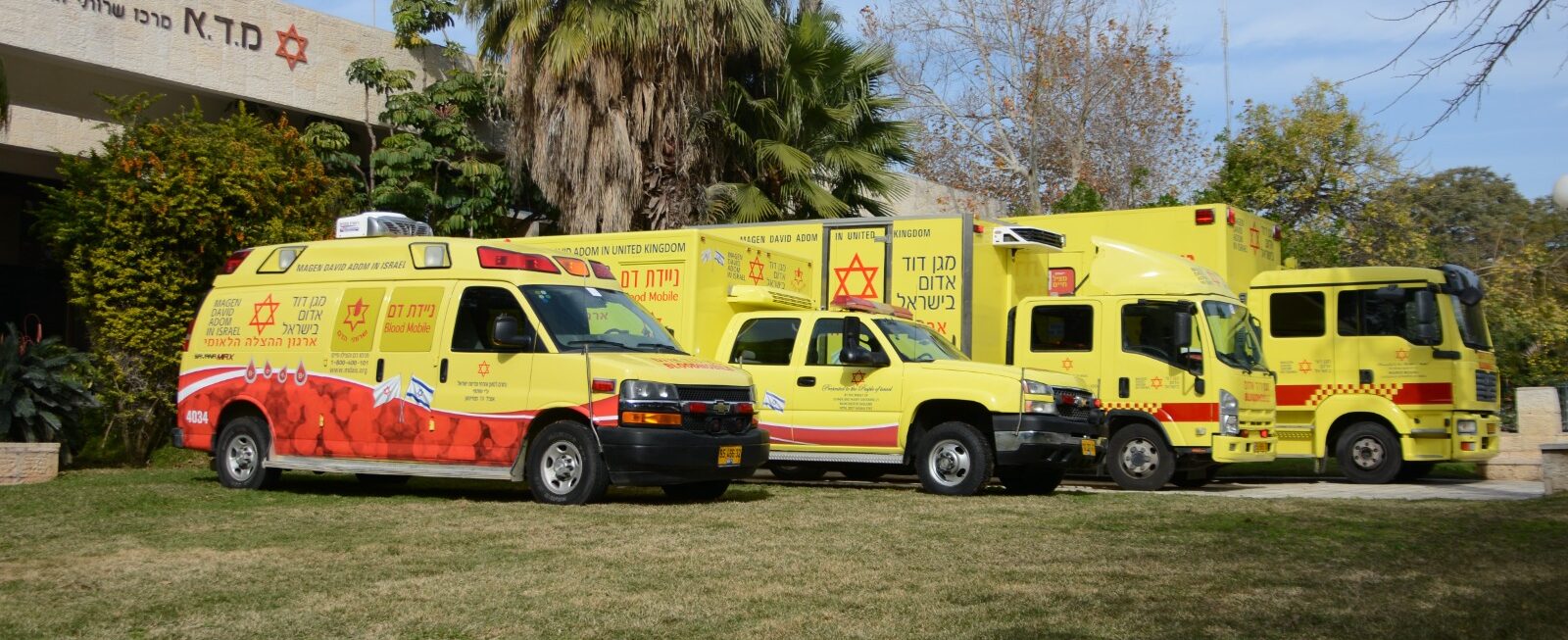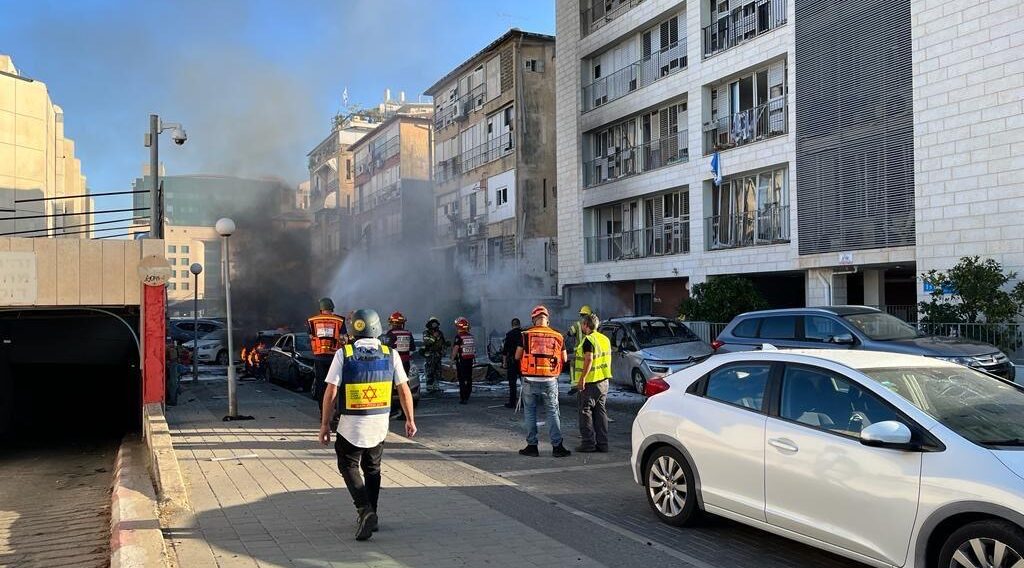





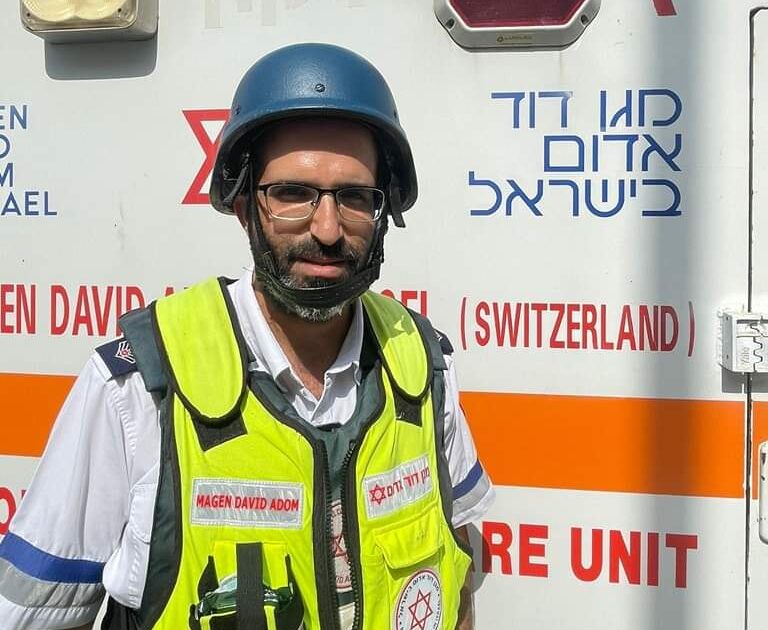
Elor Tawil is a veteran and esteemed volunteer at MDA Sderot, a father of five, the youngest of whom was only two weeks old. At that hour, he kissed his wife and children who remained in the protected room and left his home for the MDA station—as he did during every incident that occurred from time to time in the battle-worn city of Sderot—to assist his colleagues in treating the wounded in impact zones. No one yet knew that this was a completely different kind of horror.
When he arrived at the station, Elor, a Torah-observant man, called his wife and told her: “Terrorists are in the city, lock yourselves in the protected room. Notify everyone you can.” He then took initiative, started the armored ambulance, and prepared it for evacuation. Immediately afterward, paramedics Netanel Dahbash and Amit Hananya quickly loaded the wounded patient into the armored ambulance and began evacuating to the hospital, despite the terrorists surrounding them.
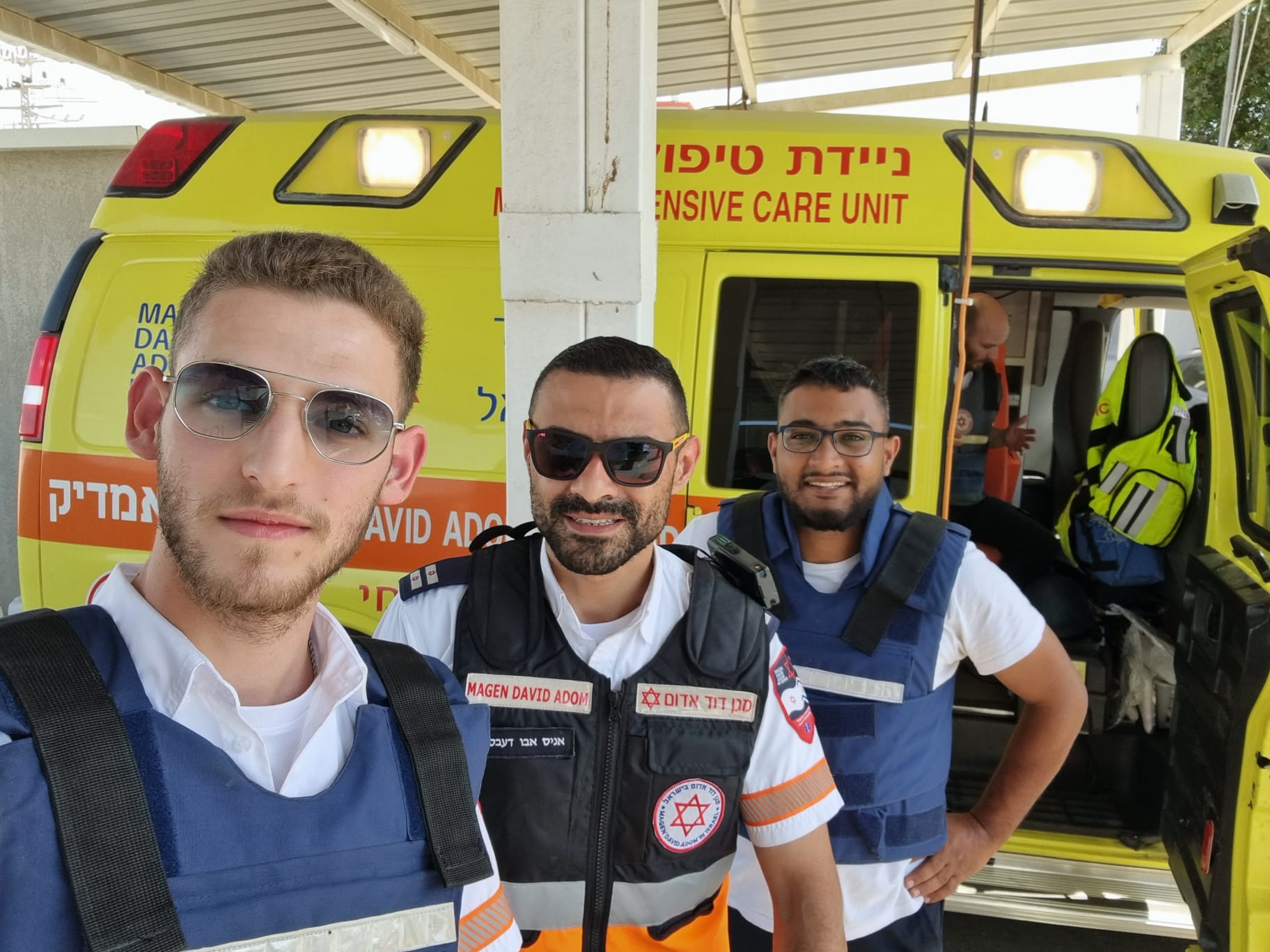
The bulletproof Intensive Care Mobile team began a round of evacuations that lasted until the early hours of the night. At one point, Amit Hananya moved to another ambulance, and paramedic Hadar Kolatkar joined the armored ambulance in his place. Initially, they evacuated the wounded who were at the station and then from the rest of the city of Sderot, which had turned into a battlefield. It was a race of good against evil—terrorists shooting and hitting, while MDA teams reached the wounded, providing life-saving treatment and evacuating to the hospital under risk.
The paramedic who worked with Hadar during the night shift, Naor Sabag, also continued to treat the wounded throughout the day. “During the first evacuation, we realized the scale of the event,” Elor recalls.
“When we saw bodies on the road, bodies inside vehicles… dozens of dead people… we treated the critically wounded patient on the way and felt as if we were heading into the unknown. A route so routine and familiar, from the city to the hospital, the ambulance wheels knowing the way almost by themselves, and now it looked like a scene from a horror movie.
At one point, we were called to the Sderot police station. We treated brave fighters wounded all over their bodies, all bleeding, in very serious condition caused by blood loss, treating them as best as possible and evacuating them for further care. On the way back from that evacuation, more fighters stopped us. One of them was very seriously injured and they asked for our help. He had a very severe head injury that required emergency field treatment to give him a chance to survive. We pulled over to the side of the road, drew medications, performed advanced life-saving treatment, and evacuated him.”
I ask Hadar why they actually stopped for this type of treatment in such a dangerous area, and she replies: “Because this is who we are and this is what we were meant for. I understand I am in a dangerous area. Every minute is critical for me and for my patient’s life, but this is our mission, this is what I learned to do. I also felt good with my team,” she recalls.
When they return to the Sderot police station, sounds of gunfire and explosions are heard, and they realize the event is nowhere near over. There are more and more wounded fighters. Despite the indiscriminate killing in the streets, the team does not lose its compassion and humanity. At one point, the team is called to an elderly couple in their home. An elderly man was hit by gunfire, and his wife sat there with him. It quickly became clear that he did not survive. “Now what do we do?” they recall,