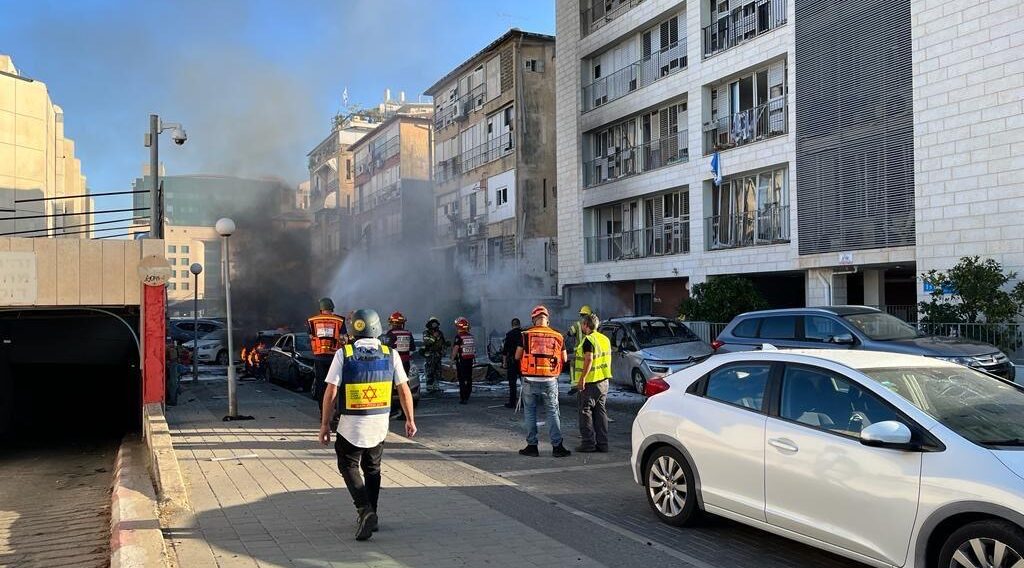




Saturday. Early morning. A holiday. Shimon Elkobi, Magen David Adom’s Negev Region Manager, had been awake since 05:00. When the sirens sounded, he too felt that this was more than just another security escalation.
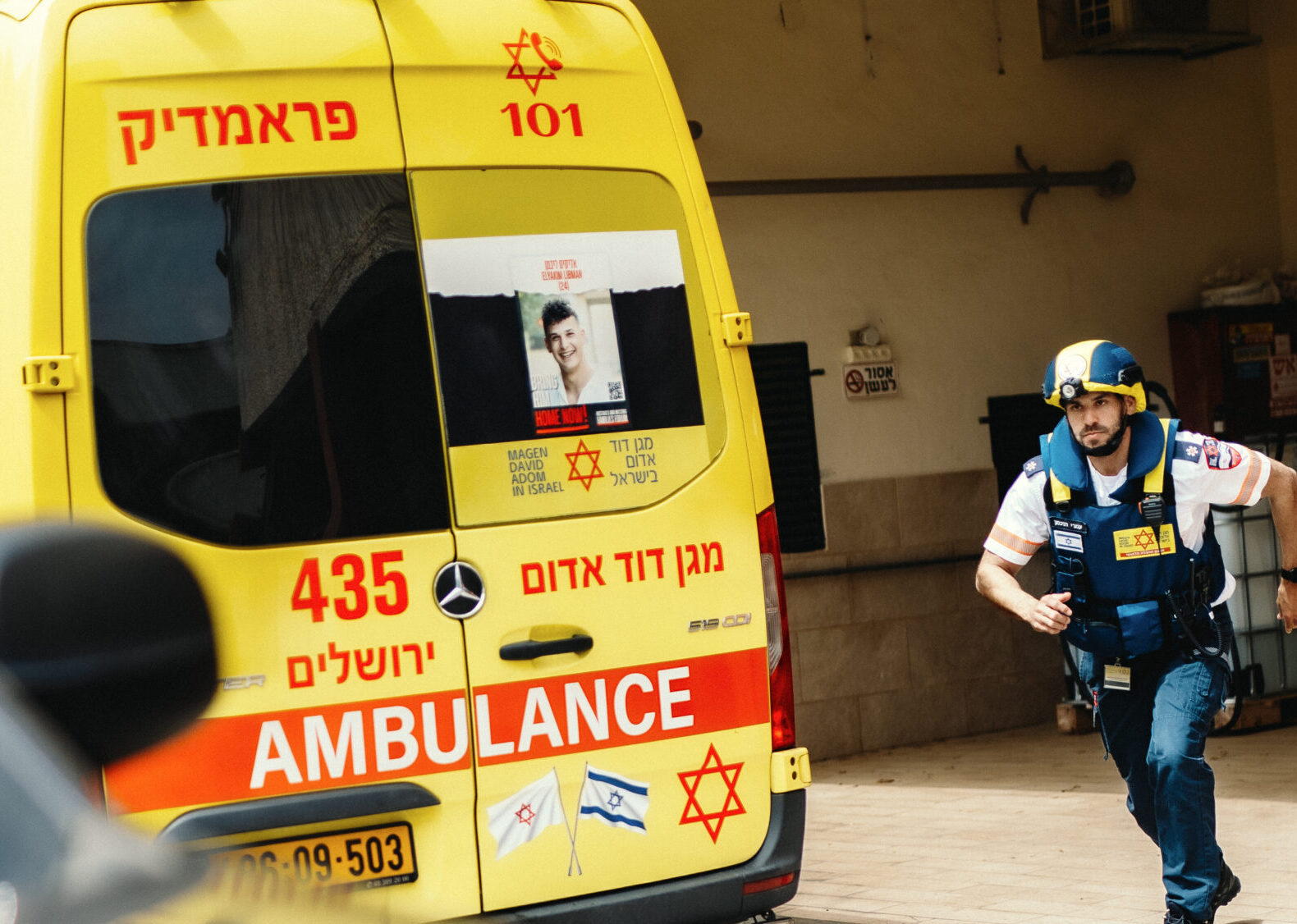
Already at 06:40, he instructed the station managers and the dispatch center to switch from routine to emergency mode and to ensure that all ambulances were staffed. He put on his uniform and headed towards the Magen David Adom station in Be’er Sheva. On the way, he called all military and emergency personnel to understand what was happening.
Emergency calls began coming in about shooting victims in the Ofakim and Netivot areas. Magen David Adom ambulances from the Negev Region set out to treat the wounded. On the radio in his car, Shimon heard the chilling report from Magen David Adom paramedic Dani Starkman, his friend, EMT and ambulance driver Peter Lesnik, who was hit
by gunfire near Ofakim while driving an intensive care unit. Shimon decided to drive towards Ofakim. No one yet knew the extent of the horror unfolding in the South in general, and in the city of Ofakim in particular, where terrorists had infiltrated for a terrible killing spree.
When Shimon arrived at the Magen David Adom station in Ofakim, he saw that all the station’s ambulances were already staffed with teams who had been called in from their homes and dispatched to assist in the sector. Suddenly, a police car arrived, and two officers quickly emerged, carrying between them a wounded police officer who had been shot and was suffering from significant bleeding.
Shimon, the region manager, a paramedic by profession like most Magen David Adom managers, laid the injured officer on a stretcher and provided him with life-saving treatment.
“More and more wounded people, as well as our own staff members, started arriving. We began evacuating them. Four lightly wounded women arrived from the party in Re’im,” Shimon recalled, “and they told me there were about thirty wounded people in Re’im. I remember thinking: ‘Wow, thirty wounded? That’s a lot…'” Magen David Adom
teams continued to arrive at the station. Everyone was ready to help with whatever was needed. Among others, Shimon mentioned Sima, a volunteer driver from Yeruham, and Linoy Weizmann, who were there and helped.
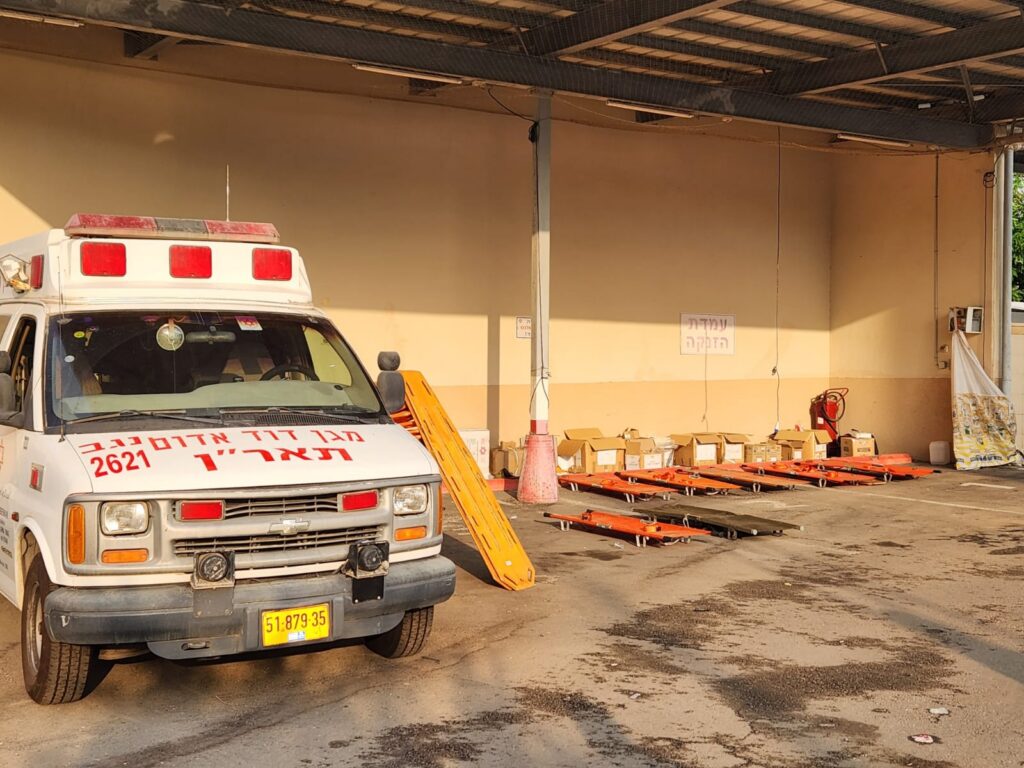
As part of the constant emergency preparedness, Magen David Adom stations maintain a stock of medical equipment for emergencies, such as an earthquake. And so, Magen David Adom personnel in Ofakim set up a treatment site at the station; they deployed emergency equipment, set up stations, opened stretchers, assigned roles, and under Shimon’s instruction
arranged for a mobile first aid station from Be’er Sheva to arrive in Ofakim. More and more wounded people with various degrees of injury arrived in ambulances and private vehicles. Soldiers, police officers, and civilians. Magen David Adom women and men treated everyone feverishly. They stopped bleeding, bandaged wounds,
administered intravenous fluids, and sometimes provided more advanced treatments. Unfortunately, the police officers also brought the bodies of their comrades and civilians and began to respectfully gather them at the station. Each time an ambulance arrived, they loaded wounded people onto it and evacuated them to the hospital according to a well-considered order of priorities.
“There was a wounded soldier who was taken off the vehicle, with a tourniquet on his thigh. The thigh was swollen from blood loss. Pale, conscious. Usually, I didn’t intervene in the treatment, there was no need, but somehow it happened that I saw him being taken off the vehicle and I told the team: ‘Come on, get him into the ambulance and give it
gas to the hospital.’ In retrospect, it turns out that I know that soldier’s father.”
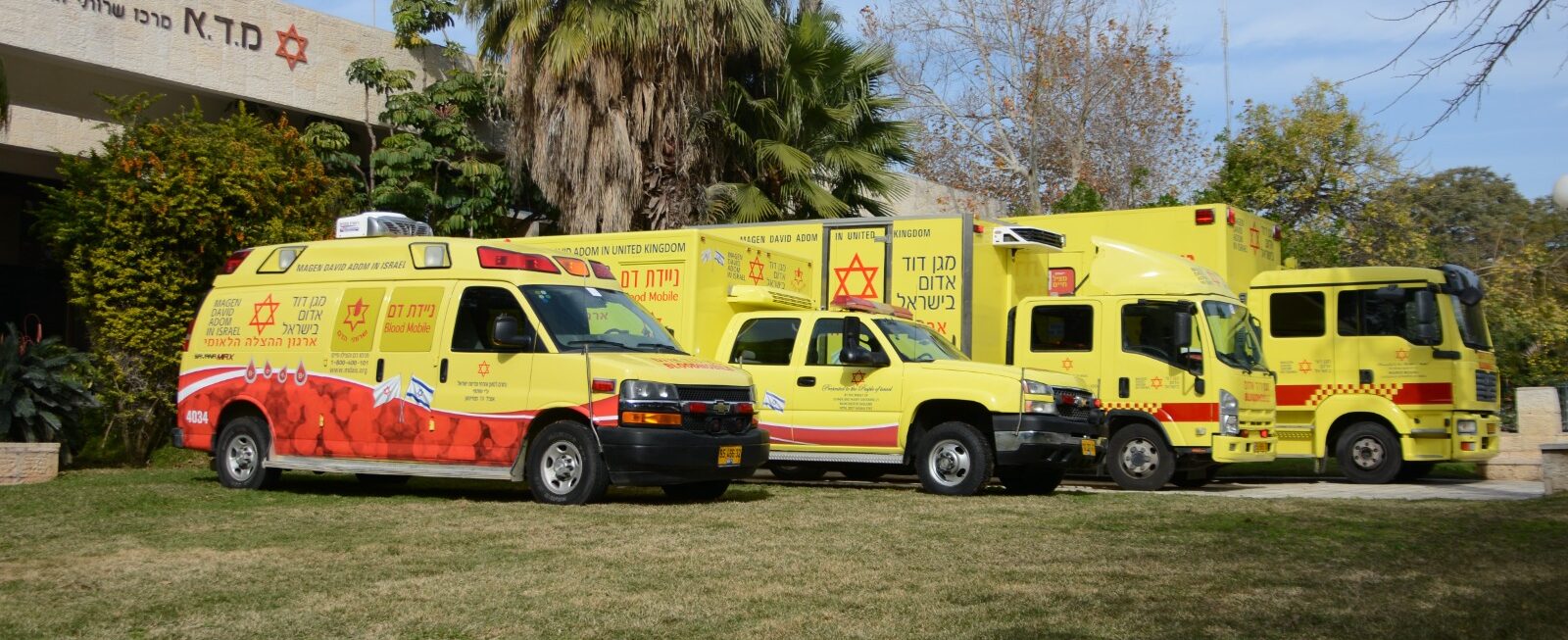
All that time, Magen David Adom ambulances and intensive care units were constantly dispatched to Ofakim and its surroundings to evacuate wounded people of varying severity, and bulletproof ambulances also arrived from all Magen David Adom regions for reinforcement.
Meanwhile, the region manager, who was overseeing the treatment site, heard about his people being hit by terrorist gunfire. He heard about Aharon Haimov, may God avenge their blood, who went out and lost contact; about Aviya Hetzroni, may God avenge their blood, who was hit by gunfire in Kibbutz Be’eri and Magen David Adom personnel couldn’t reach him; and about Amit Man, may God avenge their blood, with whom contact was lost at noon.
At some point, Itzik Buzukashvili, may God avenge their blood, commander of the Segev Shalom police station, arrived at the Ofakim station. With immense courage and dedication, he brought his friend, the commander of the Rahat station, J.R. Davidov, may God avenge their blood, who was injured by gunfire, to the Magen David Adom station in his vehicle.
“Unfortunately, the commander of the Rahat station was already deceased,” Shimon recounts. “While Buzuka was with us, I asked him to identify the many police officers’ bodies we had. He went through them one by one, person by person,
and told me their names. He knew all of them personally. It’s a very difficult situation. I wrote down the names and then we closed the body bags. Heartbreaking.
Suddenly, a report came in that terrorists were spotted at the entrance to the Magen David Adom station in Ofakim. The teams brought the wounded inside and barricaded themselves in the station. Buzuka knelt down, weapon in hand, aimed at the entrance gate to the station, ready
to defend the Magen David Adom teams and the wounded, and I stood beside him. After a while, the threat was removed, and he stood up and told me: ‘Okay, I’m going,’ and left. Half an hour later, we received a report that he himself was killed when he returned
to fight. May his memory be blessed. A hero of Israel,” Shimon said sadly.
“All the time I was in contact with the mayor because we had accumulated so many bodies. Police officers came to the station and asked me for body bags; I gave them, of course,
and asked them to send me more from other stations. When I arrived at the cemetery in Ofakim on Saturday night, there were over seventy bodies.”
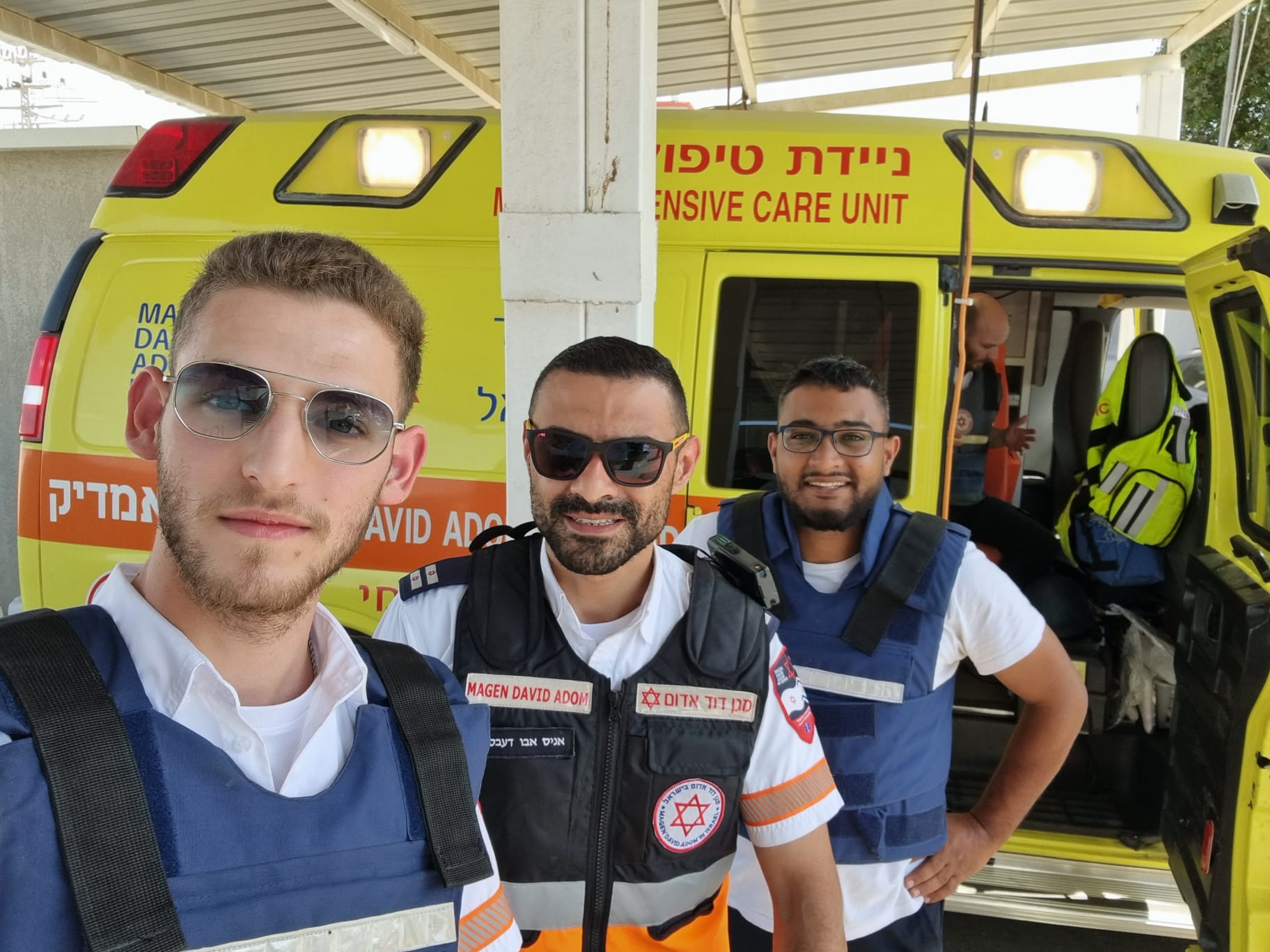
“In this disaster, all the women and men of Magen David Adom rallied and acted in an astonishing way,” Shimon says about his people from the Negev Region, “with dedication, with commitment. And all this time, their families were locked in safe rooms. They acted automatically, jumped in without thinking. Their readiness for the situation was very good. Everyone knew exactly what they needed to do; there was no need to say anything more than once. Everyone was involved in the event, even those who had no home to return to, even those who were called up for reserve duty, even those who received reports of colleagues who were murdered, wounded, and abducted – everyone rallied to save lives, adapting very quickly to what was happening.
As their manager, I greatly appreciate what they have done and are doing,” Shimon concluded.