
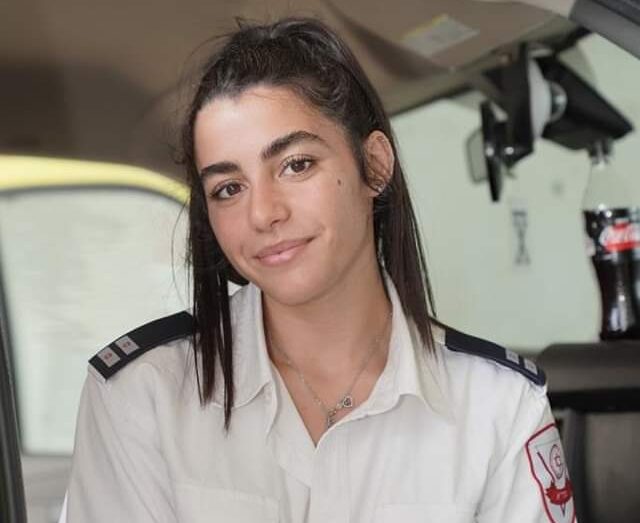
Oshrit Hadad is a paramedic at the Magen David Adom Ashdod station and resides in Netivot. She was the
best friend of MDA paramedic Amit Man, of blessed memory, who was murdered while treating wounded individuals in Kibbutz Be’eri.
Oshrit and Amit began their journey at MDA as youth volunteers at the Netivot station, and in due course,
both successfully completed the demanding and challenging program and were certified as paramedics.
Throughout the morning of October 7th, Oshrit spoke and corresponded with her good friend Amit with great
concern. “I spoke with her all day, from the morning. She explained her situation. I tried to help her
as much as possible. Unfortunately, at 2:00 PM, she stopped responding to me. I understood that contact with her was lost,
and I hoped she was alive.” It was important for Oshrit to be useful, so she decided to go to the MDA station
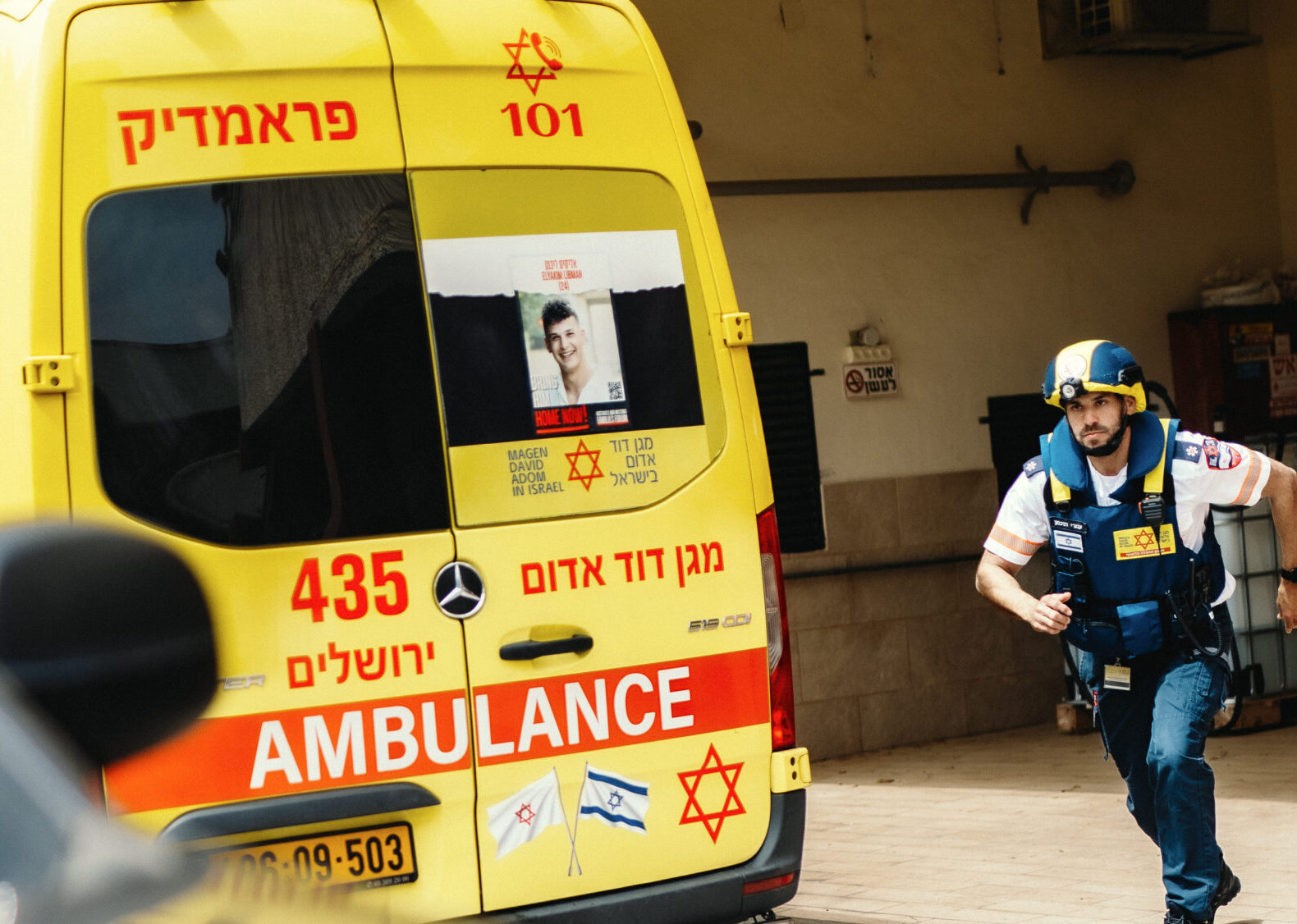
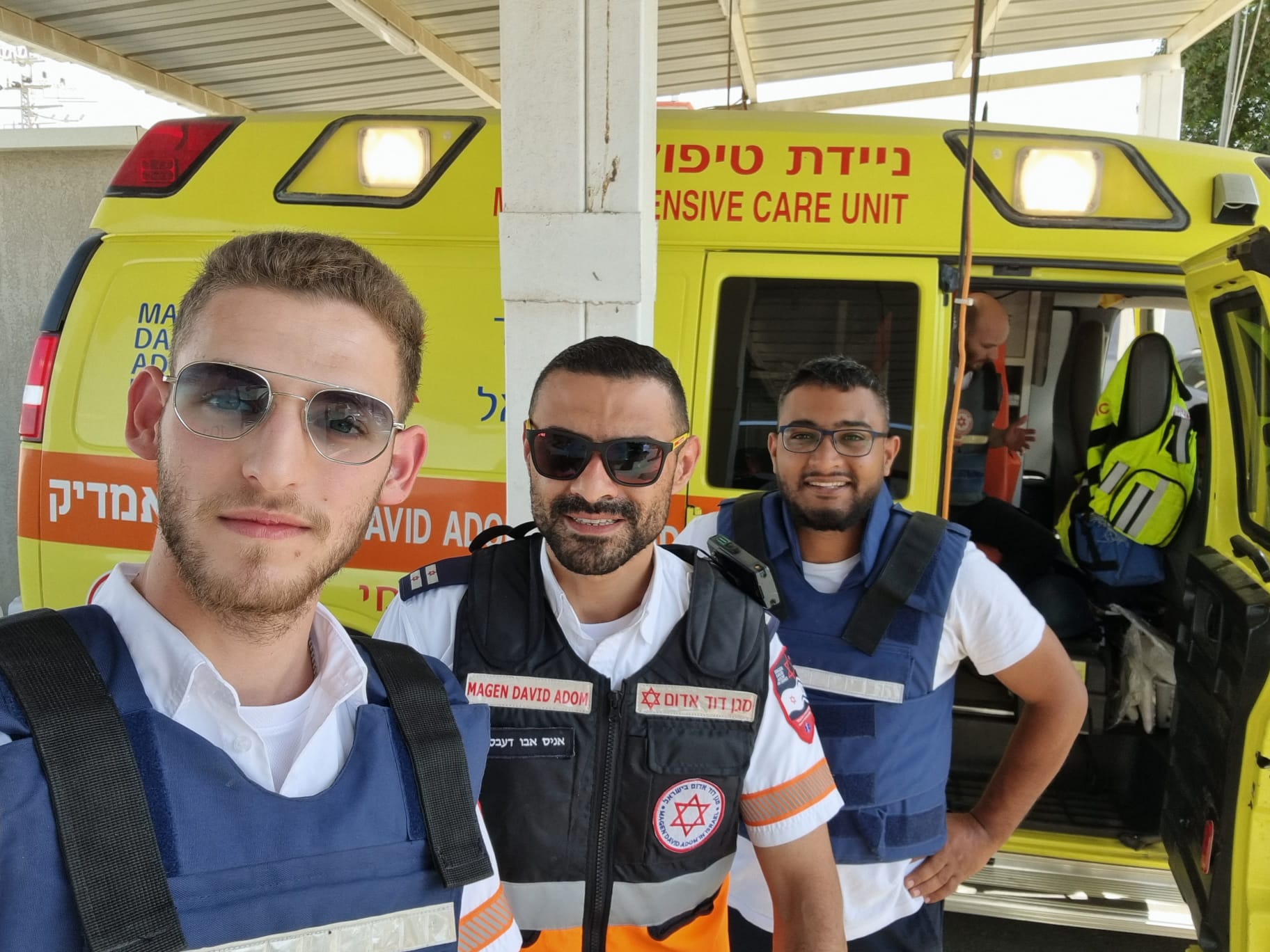
in Netivot to assist the casualties. Upon arriving in Netivot, Oshrit was dispatched to treat the wounded using an intensive
care ambulance. “We saw many bodies by the roadside,” she recalls. “We drove on the road towards Be’eri, and on the road
we treated the wounded. Afterward, in coordination with the police and the IDF, we set up a triage and treatment station for the wounded
from Kibbutzim Be’eri, Sa’ad, and Re’im, which were under attack; we provided life-saving treatment to soldiers and civilians;
We set up field stretchers side by side; next to each stretcher, we placed medical equipment: a ventilator for resuscitation,
oxygen, an advanced resuscitation kit, bandages, tourniquets, equipment for intravenous access (infusion);
We made sure to place floodlights on both sides to illuminate the area; additionally, we placed a table with ‘extra’ equipment on the side:
bandages, medications, anesthetics, ventilation equipment, and more. Several soldiers secured the
treatment site.”
Oshrit and her team treated many wounded, understanding they were in a race against time. “We worked very quickly,
stabilized the condition of the wounded, and they were immediately evacuated to hospitals, mainly by helicopters, and sometimes also
by ambulances.” All that time, they worked in a combat zone, with very close explosions and gunfire, but that did not deter
them, “until we received a call from the dispatch center telling us to leave immediately because terrorists were on their way
to us on motorcycles, so we packed everything up, loaded the wounded into the ambulance, and sped away from there.
Everyone felt they needed to ‘be there,’ everyone wanted to help and treat. We knew there were many wounded because we were
in contact with people inside. Everyone was focused; we knew we were needed, so we came. We worked for 48 hours
with almost no breaks. There was a very large number of casualties who needed us.”
From Saturday morning until Sunday morning, Oshrit and the team treated the wounded at the treatment site they established. On
Sunday morning, they evacuated a patient for the first time to Soroka Hospital in Be’er Sheva. On the way back, they stopped
in Netivot, organized themselves, and drove back to the junction. Oshrit testifies that she worked continuously treating the wounded and did not sleep
from Saturday until Tuesday evening.
All the cases they handled were heartbreaking, but two are particularly memorable to her: “A soldier from a
special unit, shot in his entire arm and leg, with tourniquets, would not let us treat him. He said: ‘Just give me something
for the pain, I’m going back in there to fight.’ Eventually, we managed to convince him, and he agreed to receive treatment.
I also remember a critically wounded soldier who asked me to recite ‘Shema Yisrael’ with him and to tell his
family that he loved them, missed them, and did everything to protect them. It will take time to process everything,”
Oshrit concludes, “but I want to thank everyone who was with me there. Everyone truly did an amazing
job.”